



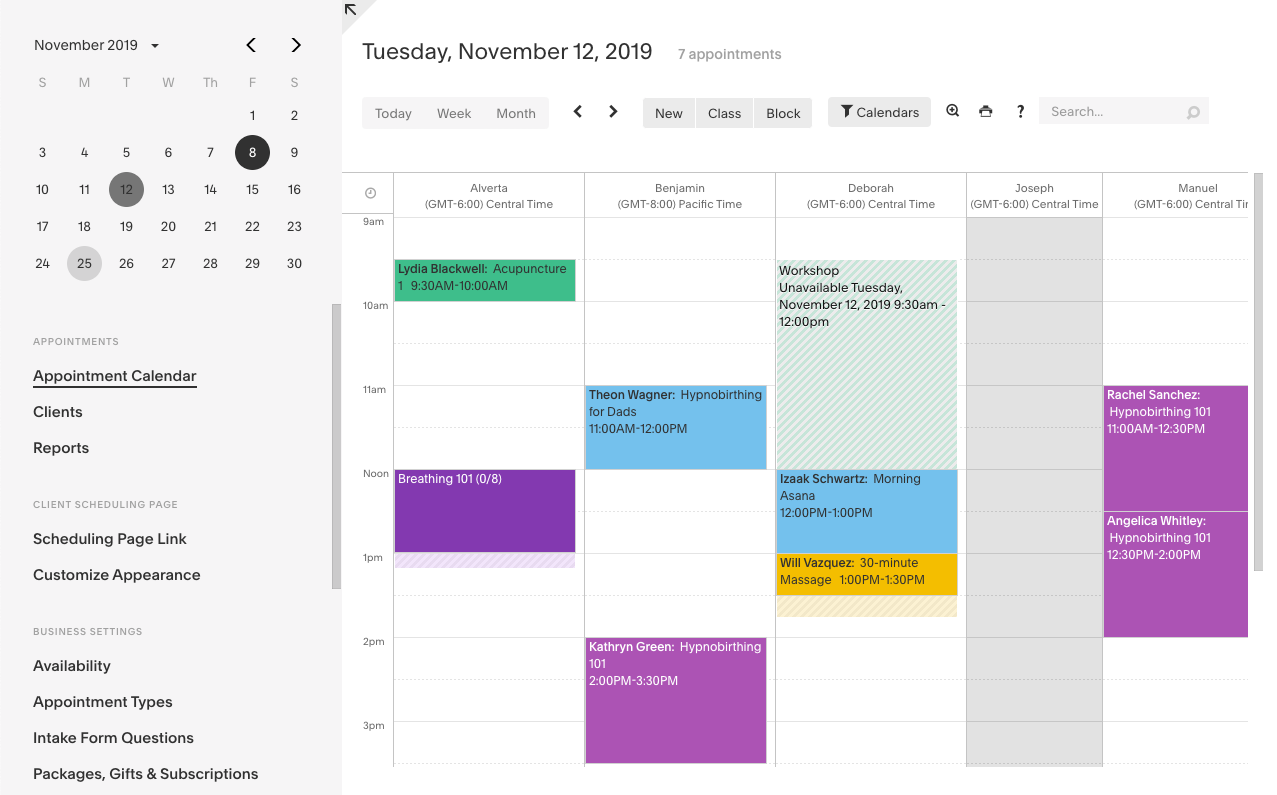

Acuity Scheduling is built for appointments. That’s fine at the start.
Acuity Scheduling works well for solo practitioners and early-stage studios that mainly run appointment-based sessions. Many studios start there because it’s simple and affordable. The challenge usually appears only when studios begin offering classes, memberships, and multiple services.
At this stage, many studios start looking beyond scheduling-only tools and explore systems that support memberships, class packs, waitlists, and recurring engagement in one place.
2. Manual Admin Increases as Studios Add More Services
If your team is constantly fixing bookings, that’s a red flag.
If you’re tracking attendance manually, that’s another one.
Scheduling-first tools are typically designed for simpler booking use cases and may require more manual work as studio operations become more complex.
Many growing studios eventually move to more integrated systems that reduce manual admin. Automated booking updates, capacity controls, and synced payments help teams spend less time fixing issues and more time supporting clients.
3. Growth Creates New Operational Requirements
Growth is exciting.
More classes.
More instructors.
More locations.
As studios grow, clearer reporting, better visibility into attendance trends, and more flexible scheduling logic become increasingly important.
At this stage, studios typically look for platforms that support multiple class types, provide clearer reporting, and offer visibility into attendance and revenue trends. This kind of insight helps owners make decisions without relying on guesswork.
4. Disconnected Systems Create Client Friction
Clients notice friction fast—confusing bookings, missed emails, and limited self-service options all add up, and that friction quietly costs you retention. Studios that use more integrated systems often see smoother booking, clearer communication, and better self-service experiences for clients.
As a result, studios using more unified systems are often able to deliver a smoother, more premium client experience without adding operational complexity.
Conclusion: When Basic Scheduling Is No Longer Enough
Acuity Scheduling works for simple needs, but growing studios need more.
When studios outgrow basic scheduling tools, the question isn’t which tool is “bad” – it’s whether the system still fits how the business operates today.