


If you run a Pilates, yoga, HIIT or martial arts studio in Malaysia, you are probably not asking whether you need software any more. You are asking how to choose the best gym booking system for boutique fitness studios in Malaysia so that classes, payments and compliance all run smoothly.
The right system for a Malaysian boutique studio has to do three things at once:
- Handle class capacity, waitlists and memberships properly.
- Support local payment methods your members actually use.
- Stay aligned with Malaysia’s phased e-invoicing rollout through the MyInvois portal.
This guide walks through how to evaluate systems with that lens, and how a platform like vibefam fits into the picture without turning this into a hard sell.


What Makes A Gym Booking System Truly The Best Choice For Boutique Fitness Studios In Malaysia?
How do boutique fitness studios in Malaysia run differently from big-box gyms?
Boutique studios in Kuala Lumpur, Penang or Johor Bahru look nothing like big-box gyms with access cards. A typical boutique setup has:
- Fixed capacity per class, tied to bikes, reformers or floor space.
- High-touch coaching, where members choose specific time slots and instructors.
- Revenue is built on memberships and packs, not just open access.
For that model, the booking system is the operational core. It needs to:
- Allocate every spot fairly.
- Enforce booking and cancellation rules.
- Keep member entitlements and attendance in sync.
vibefam explicitly positions itself as “fitness class booking software and scheduling app” for studios and gyms, not as a generic POS or CRM. Its core promise is to automate class scheduling, member bookings and payments in one platform.
If your current tool feels like a retail system with a basic timetable attached, that is usually a sign it will struggle as you grow.
Why should boutique studios prioritise class-first booking features over generic POS functions?
A POS device can take payments, but it cannot run your studio schedule on its own. Boutique studios that buy POS-first systems often end up:
- Managing bookings via spreadsheets and chats.
- Manually checking who is allowed into each class.
- Reconciling multiple systems at month-end.
A class-first system flips that around. vibefam’s Malaysia page and global homepage both emphasise:
- Automated class scheduling with waitlists and cancellation rules.
- Membership and pack management.
- A member app and booking website on higher plans.
POS sits on top of that as an integrated phone terminal and payment workflow, instead of being the main event.
For a boutique operator, that order matters. If booking logic is weak, it does not really matter how slick the POS screen looks.
How Does The Malaysian Market Context Change What You Need From A Gym Booking System?
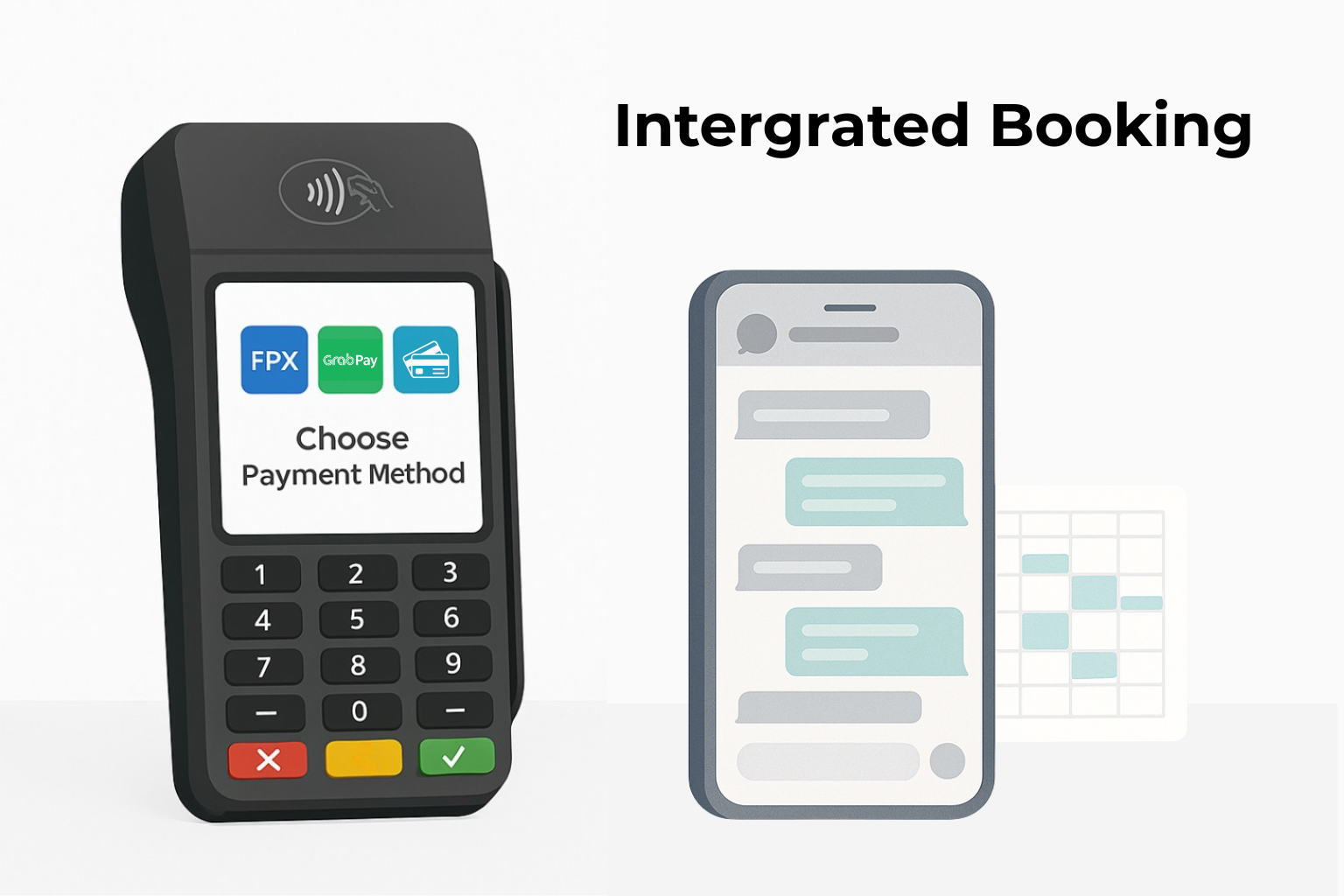
How are Malaysian payment habits shaping the ideal gym booking system?
Malaysia has moved quickly towards digital payments. Bank Negara Malaysia notes that about 79 per cent of Malaysian adults use digital payments, many of them starting during the pandemic years.
For your studio, that shows up as:
- Members want to pay via FPX rather than manual bank transfers.
- Growing use of e-wallets like GrabPay, Alipay and WeChat Pay.
- Expectations of a smooth, card-like online checkout.
vibefam’s product and content pages underline this shift. They highlight:
- Integration with payment gateways that support PayNow, GrabPay, FPX, Alipay, WeChat Pay and other local methods in Southeast Asia.
- Automatic reconciliation of online and offline sales into one dashboard.
A system that only accepts cards can still work in Malaysia. It just makes life harder for members and adds manual work for your team.
A practical next step is to note which payment methods your members already use, then shortlist only systems that can support those methods natively and reconcile them automatically.
Why are e-invoicing and the MyInvois portal important when choosing fitness studio software?
Malaysia is rolling out a national e-invoicing mandate in phases. The Inland Revenue Board (IRBM) has confirmed that implementation started on 1 August 2024 for businesses with an annual turnover above RM100 million, and will extend to smaller businesses over several phases until 2026.
The MyInvois portal, provided by IRBM at no charge, is the main gateway for issuing and validating e-invoices, either manually or via API integration from your own system.
vibefam’s Malaysia e-invoicing guides state that:
- E-invoicing in Malaysia applies to fitness studios as well as other sectors.
- vibefam is integrated with MyInvois so that compliant e-invoices can be generated and submitted directly from within the platform.
If your gym booking system does not support MyInvois, you are effectively planning to:
- Issue invoices in a separate tool.
- Match them manually to bookings and payments.
- Carry a greater risk of errors when your threshold comes into scope.
That is why e-invoicing support needs to sit near the top of your system checklist, not at the bottom.
How are Malaysian studios moving from WhatsApp and spreadsheets to fully integrated systems?
Many boutique owners still recognise this pattern:
- Members DM you on WhatsApp or Instagram to book.
- You update an Excel sheet and send payment instructions.
- Finance tries to reconcile everything after the fact.
vibefam’s Malaysia page and Asia-focused blogs on affordable gym management and martial arts studio software describe this situation directly. They position an integrated booking system as the way to centralise scheduling, payments and compliance, instead of spreading them across chats and files.
If you are still juggling three or four separate tools, a class-first system with local payments and MyInvois support gives you a realistic way to simplify operations without losing control.
If you want a quick diagnostic, compare your current workflow with the scenarios in vibefam’s Best Gym Management System in Malaysia article and note where you are relying on manual work instead of system rules.
Which Booking, Membership And Staff Workflows Should You Test Before Choosing Software?
How should class scheduling, waitlists and cancellations work for a boutique studio?
A Malaysia-ready booking system should let you:
- Create recurring schedules for group and private classes.
- Set capacity per class and per format.
- Run waitlists that automatically promote members when someone cancels.
- Enforce booking and cancellation windows that match your policies.
vibefam’s Malaysia page and main product description highlight automated scheduling, waitlists and cancellation policies as core features managed from one dashboard.
When you run demos, ask vendors to reproduce your busiest classes, set actual capacities and show you exactly what happens when:
- A class fills up.
- A member cancels inside and outside the cut-off window.
- A waitlisted member gets promoted.
You should not have to touch a spreadsheet to keep things fair.
How should memberships, packs and drop-ins behave in a Malaysia-ready gym booking system?
Most boutique studios in Malaysia sell a mix of:
- Recurring memberships.
- Class packs with a defined expiry.
- One-off drop-ins.
- Intro offers for new members.
vibefam’s feature list and pricing tiers show support for selling memberships, class packages, and drop-in passes with secure online payment and automated renewals, particularly from the Great Value plan upwards.
In a trial, check that the system can:
- Model each product you use today.
- Track usage and expiry clearly in each member’s profile.
- Report separately on recurring and non-recurring revenue.
If you need workarounds just to represent your current pricing, the system is likely to fight you as you grow.
Why does real-time spot booking matter for equipment-based studios in Malaysia?
If you run reformer Pilates, spin, aerial yoga or strength pods, capacity is not only about how many people you can fit in the room. It is about who is on which bed, bike or platform.
vibefam’s global and Malaysia pages both mention real-time class spots booking, including the ability to customise floor plans for spin, reformer Pilates or aerial yoga and track availability in real time.
Real-time spot booking helps you:
- Avoid arguments at the door about who gets which reformer or bike.
- Protect premium rows or sections for certain membership tiers if you choose.
- Give members more control over their experience, which supports retention.
If this describes your studio, make spot booking behaviour a non-negotiable in your evaluation.
How should staff access, payroll and reporting work in an all-in-one system?
A solid system should support team workflows as well as member flows. For staff, you want to see:
- Role-based access, so admins, front desk staff and instructors see the right tools.
- Attendance data that feeds into simple payroll exports.
- Reports and dashboards that answer basic questions without extra spreadsheets.
vibefam’s pricing page mentions access rights customisations on the Most Popular plan and staff payroll tools on the Professional plan, alongside reports and dashboards across tiers.
This is a good area to involve your accountant. Ask them to review sample exports from any system you trial and tell you how much work they would still need to do outside the platform.
How Should You Evaluate Payments, FPX Billing And E-Invoicing In A Gym Booking System?
What does a Malaysia-ready payment stack look like for boutique studios?
A Malaysia-ready payment stack reflects both member behaviour and your own financial needs. At a minimum, your system should support:
- Cards for members who are comfortable with them.
- FPX for bank-linked payments, which are widely used in Malaysia.
- Popular e-wallets such as GrabPay, Alipay and WeChat Pay for seamless payment.
On top of that, it should:
- Reconcile transactions automatically into one dashboard.
- Let members securely store payment details where supported, to speed up future bookings.
vibefam’s “Seamless Payments” content and Local Payment Integration pages are explicit about working with PCI-compliant payment partners and supporting local methods across Southeast Asia.
If a vendor cannot show you FPX and at least one wallet working in a live demo, that should be a serious concern.
How should recurring billing and failed payments be handled?
For recurring memberships, you want:
- Clear setup of recurring charges via supported methods.
- Automatic handling of renewals.
- Transparent behaviour when payments fail, such as pausing access or flagging accounts for follow-up.
vibefam’s Southeast Asia payment guides stress that platforms limited to cards create unnecessary friction in markets where FPX dominates, and position local payment integration as key to stable recurring revenue.
In a trial, ask vendors to:
- Set up a test recurring membership.
- Walk you through what the system logs and shows when a payment does not go through.
You are checking that the billing logic is reliable and that staff do not have to guess what has happened.


How should MyInvois e-invoicing look in daily studio operations?
For e-invoicing, the core question is simple: does the booking system connect directly to MyInvois, or are you expected to bridge the gap yourself?
IRBM describes MyInvois as the official portal for e-invoicing, available at no charge and accessible either directly or via API integration from business systems.
vibefam’s e-invoicing articles explain that vibefam is integrated with MyInvois so that every relevant transaction, from memberships to class packs, can trigger a compliant e-invoice without leaving the platform.
In practice, this should look like:
- Invoices are being created automatically when payments are captured.
- Submissions to MyInvois are happening in the background.
- Reports you can export for audits or reviews without stitching together multiple sources.
Any extra steps beyond that are extra work for your team.
If you want to see what this looks like in a real workflow, you can book a demo with vibefam and ask the team to walk you through FPX payments, wallet checkouts and MyInvois submission in a live environment using scenarios similar to your studio.
How Do Global And Local Gym Booking Systems Compare For Boutique Studios In Malaysia?
Why do generic comparison listicles miss what really matters for Malaysian boutiques?
Most “best gym software” listicles are written at a global level. They tend to:
- Mix big-box clubs and small studios in the same ranking.
- Focus heavily on marketing features or brand recognition.
- Treat “online payments” as a generic tick box instead of asking whether FPX, GrabPay or MyInvois are supported.
vibefam’s own comparison content on gym management systems in Malaysia is more local, but even then, the nuance comes from the text, not from a one-line ranking. Those articles talk about how systems behave with real Malaysian payment methods and studio workflows rather than just counting features.
For boutique studios, that context is more valuable than yet another global top ten list.
How do local systems like vibefam position themselves differently?
vibefam markets itself as “#1 fitness class booking software for studios and gyms in Malaysia” and emphasises:
- Class scheduling, bookings and memberships as the core.
- Real-time spot booking and a branded member app for many use cases.
- Integration with local payment methods and MyInvois.
That positioning is deliberately different from global systems that focus first on card payments and large US or European markets. It is closer to how Malaysian boutiques actually run.
Why are more studios moving from global platforms to local or regional tools?
There are three main drivers:
- Stronger support for regional payment methods.
- Support and onboarding in regional time zones with local context.
- Better alignment between pricing and the features that matter day to day.
For Malaysian boutiques, the added layer of e-invoicing makes local options even more attractive. A system that already speaks FPX, GrabPay and MyInvois is simply easier to live with than one that expects you to keep patching gaps with manual work.
If vibefam is on your shortlist, this is an ideal time to schedule a call, share your pilot numbers and ask targeted questions about any remaining gaps.
What Mistakes Should You Avoid, And What Is Your Final Checklist?
Why is focusing only on subscription price risky for Malaysian boutique studios?
Price matters, but looking only at the monthly subscription can be misleading. Subscription fees do not show you:
- Transaction charges and any extra tools you still need for POS or invoicing.
- Staff hours spent moving data between systems.
- The risk and cost of switching platforms again once e-invoicing deadlines apply to you.
A better lens is the total cost of ownership. A fitness-first system that unifies bookings, payments, and e-invoicing often works out cheaper in practice than a lower subscription that leaves you with manual reconciliation, separate invoicing tools and frustrated staff. When you compare options, put a number against both the software costs and the time your team spends patching gaps. That is the figure that really matters.
How do payment and e-invoicing gaps create hidden manual work?
If your booking system cannot handle FPX, wallets and MyInvois directly, your team effectively becomes the integration layer. In day-to-day terms, that means:
- Manually checking and posting bank transfers and wallet payments.
- Issuing invoices through the MyInvois portal by hand.
- Reconciling differences between booking records, payment reports and tax documentation.
The national e-invoicing model is built around either entering invoices via the portal or using a system that connects through APIs. Choosing a platform that already integrates payments and MyInvois removes a lot of that manual effort. It also reduces the risk of errors that only surface at audit time or during tax filing. The more your booking system can handle within a single flow, the less invisible admin sits on your team’s shoulders.
Which questions should you answer before you book any demos?
Before you speak to any vendor, it helps to be clear about your own studio model. Write down:
- Your key formats and typical class capacities.
- Whether you need spot booking for reformers, bikes or other equipment.
- Your product mix across memberships, packs, terms and drop-ins.
- The payment methods your members actually use today.
- When you are likely to come into scope for e-invoicing, and what your accountant expects from any system.
Turn this into a short one-page brief and use it as your script in every demo, including with vibefam. A strong candidate should be able to reflect your reality back to you, show how their platform handles each point and give straight answers where there are limitations. If a system cannot respond convincingly to that brief, it is probably not the right fit for your studio.
Conclusion: What Is The Smartest Next Step If You Are Choosing A Gym Booking System In Malaysia?
Choosing the best gym booking system for boutique fitness studios in Malaysia is not about chasing the longest feature list. It is about finding a class-first platform that:
- Fits how your studio actually runs classes, memberships and packs.
- Speaks FPX, wallets and cards fluently, with automatic reconciliation.
- Connects cleanly to MyInvois, so e-invoicing does not become a new administrative burden.
vibefam is one of the few platforms built around how boutique studios in Malaysia actually run. It will not suit every business, but it is a strong contender if your revenue depends on class bookings rather than walk-ins.
If you are ready to move beyond spreadsheets and patchwork tools, the next step is simple: define your must-haves, book a demo with vibefam to see FPX, wallet payments and MyInvois in action, then run a short pilot and decide based on the results.