


Thinking about juggling more than one fitness studio in 2026? That’s no walk in the park. When you’re juggling team management, class bookings, service standards, and revenue tracking for multiple branches, it can feel like the admin work never lets up. But with Southeast Asia’s fitness industry booming, valued at S$2.68 billion and growing at 9.36% annually through 2030, multi-location operators who streamline their operations stand to win big.
In this guide, we’ll look at how savvy automation, all-in-one management systems, and platforms like Vibefam are making life easier for fitness studios, cutting down on admin hassles, boosting efficiency, and paving the way for real, scalable growth.


Why Getting Your Admin Right Could Make All the Difference in 2026
The Reality of Multi-Location Operations
Managing multiple studios isn’t just about more members or locations; it’s a complete shift in complexity. From juggling different class schedules to handling payments and reporting across outlets, multi-location operators face unique challenges that single-site gyms don’t.
If you don’t get a handle on these challenges, they can quickly put the brakes on your growth. But with the right systems in place, those hurdles can actually turn into springboards for growth.
It is reported that companies using automation often end up slashing their admin workload by half or even more. Some businesses even report their return on investment jumping anywhere from 30% up to 300% in just the first year.
The Cost of Manual Processes
Here’s the problem: most gym owners don’t realise how much manual admin work is costing them, especially when multiplied across multiple branches. When automation isn’t in place, fitness pros can easily find themselves buried in spreadsheets and emails, leaving less time for what matters: taking care of their members.
The average studio can save 10–20 hours per week through automation. Across five locations, that’s up to 100 hours weekly, the equivalent of hiring 2–3 full-time admin staff.
No question about
The Admin Nightmares Far Multi-Location Fitness Studios
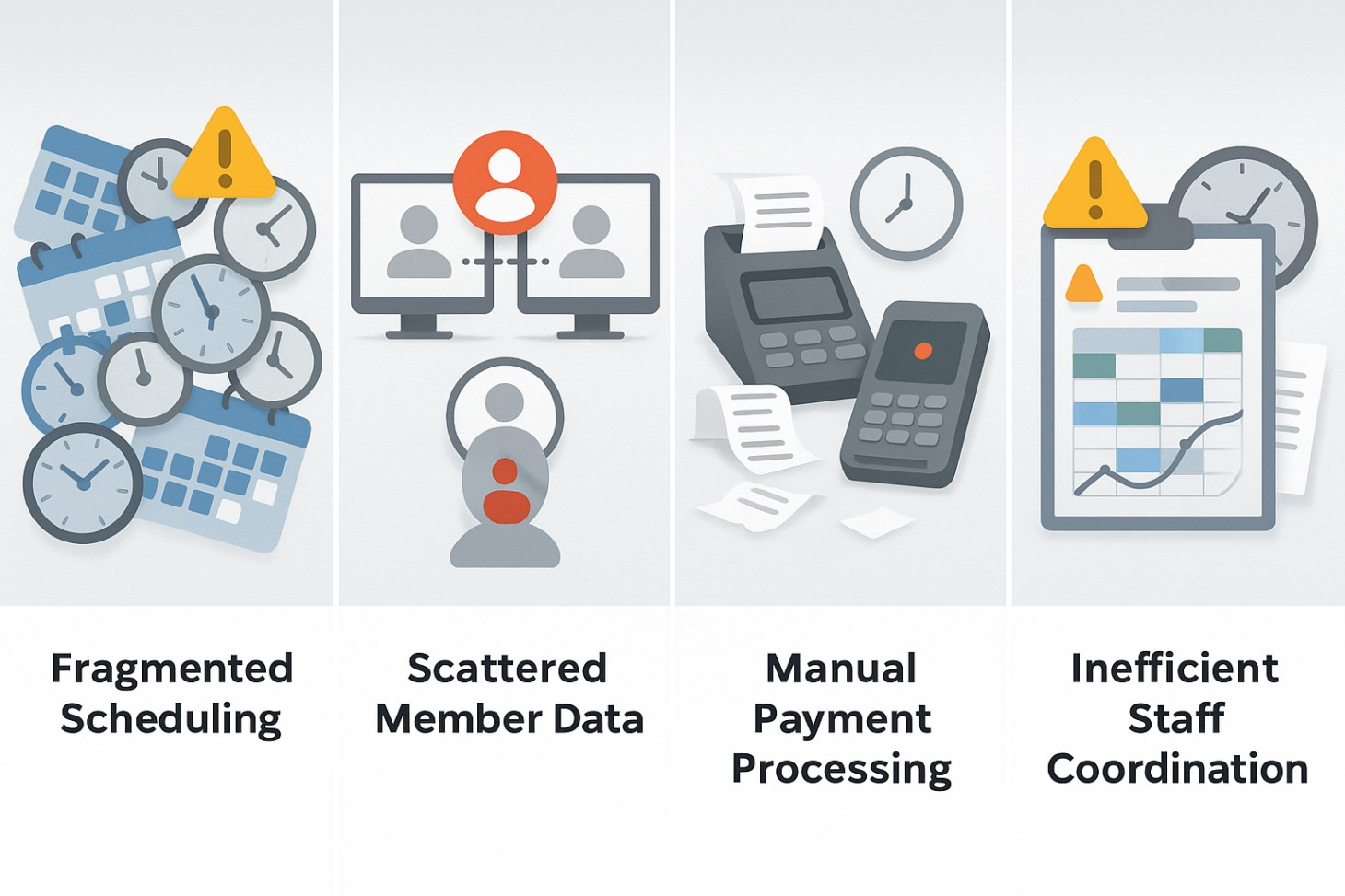
1. Fragmented Scheduling
Trying to coordinate classes at different locations usually means juggling a handful of calendars or switching between multiple tools. So what happens? You end up with double-booked classes, clashing schedules, and a patchwork of offerings from class types and instructor assignments to time slots and booking experiences. This could confuse members and weaken your brand.
2. Scattered Member Data
When there’s no central system, member profiles end up scattered across different locations, each one stuck in its little bubble. When members hop from one branch to another, they can easily wind up with duplicate accounts, incomplete histories, or inconsistent service experiences.
3. Manual Payment Processing
Collecting payments at each location, whether through cash, POS, or bank transfers, is error-prone and hard to track. Before you know it, wrangling payments becomes a total headache and it’s all too easy for cash to go missing along the way.
4. Inefficient Staff Coordination
Trying to schedule instructors for several studios means constantly balancing who’s available, who has the right qualifications, and what each location needs. Handle all this by hand, and you’re asking for trouble. Think staff burnout, payroll slip-ups, and holes in your schedule.
5. Disjointed Reporting
Have you ever caught yourself thinking about how your different locations actually compare against each other? Without integrated systems, owners often need to consolidate spreadsheets or manually gather reports, wasting valuable time and delaying decision-making.
The Impact of Operational Inefficiency
- Half of new gym members end up quitting within just six months and more often than not, it’s because of frustrating admin hassles or an experience that just isn’t consistent.
- Businesses without integrated management platforms see 20–30% higher admin costs per location.
In other words, the price of inefficiency is more than just time, it’s churn, lost revenue, and stunted growth.
A Smarter Way to Manage: Centralized Platforms
Why Having Everything in One Place Is Better
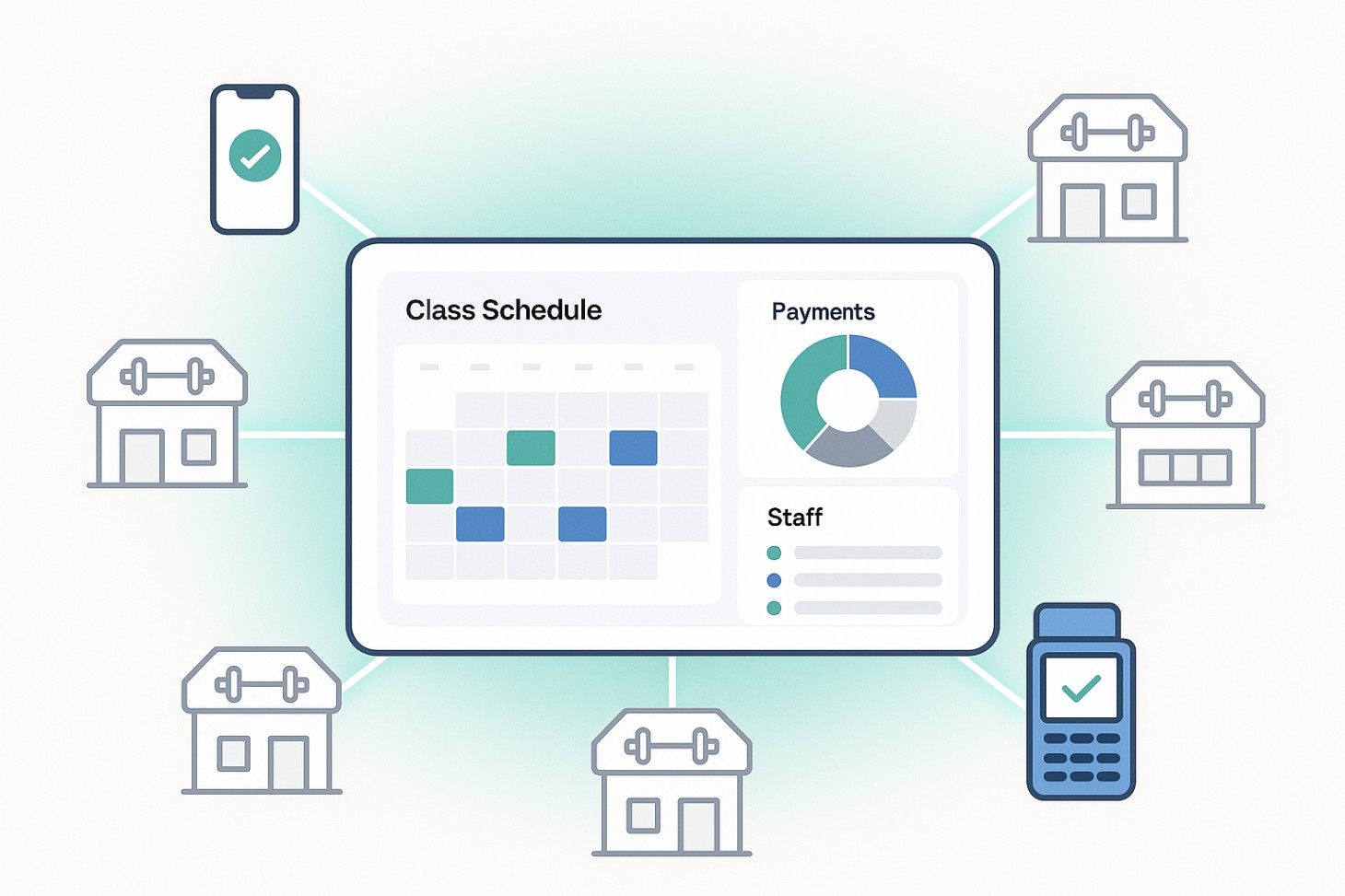
If you really want to cut down on admin headaches, it all starts with bringing everything—your locations, staff, and members—together in a single, centralized fitness management platform. That’s exactly what platforms like Vibefam are designed for.
Here’s what you get with Vibefam:
- Unified member database across branches. No more juggling separate lists; your members’ info is in one place and instantly accessible at every location.
- Cross-location class booking, no hassle, no extra steps
- Centralised payment processing
- Consolidated reporting dashboard. All in one clear, simple dashboard.
- Accepts local payments through payment gateways like Stripe and Xendit
With centralised management:
- Staff spend less time fixing errors.
- Members enjoy smoother experiences.
- Owners get clear visibility into what’s working and what’s not.
Where Automation Can Be Adopted
1. Onboarding
Getting new members settled in doesn’t have to be a hassle, just swap out paper waivers for digital ones, set up automatic welcome emails, and line up your follow-ups ahead of time. This way, everyone gets the same smooth start, no matter when they join.
2. Billing & Payments
Let the system take care of things like recurring payments, failed transactions, renewals, and receipts. No manual effort required
3. Staff Scheduling
Try using smart scheduling tools that factor in who’s available, what each instructor can do, and what every studio needs, no matter which location you’re managing.

Protecting Data with Role-Based Access
When you’re running more than one location, keeping your data private isn’t just important. It’s essential. With role-based access control, staff only see the information that’s relevant to their job. Nothing more, nothing less.
Instructors: Only see their own class schedules and attendance sheets
Branch Managers: Get access to the data for their own location
Regional Leads: Keep an eye on every branch. No more sorting through messy or confusing data.
With this approach, it’s easier to hold people accountable, sensitive information stays protected, and the risk of security slip-ups drops way down.
Choosing and Implementing the Right Platform
Key Features to Look Out For
- Cross-location class and staff scheduling: Easily manage timetables across all branches.
- Centralized member profiles: Keep all customer data consistent and accessible.
- Integrated payment gateways: Ensure smooth transactions across multiple providers.
- Financial visibility: Monitor the performance of each location at a glance.
- Local payment options: Support payments via PayNow, GrabPay, and other local channels.
- Member mobile app: Let members book classes and make payments on the go.
You can find more details over on Vibefam’s website.
Implementation Timeline (Typical 6–8 weeks)
Week 1–2: Audit current workflows, define goals
Week 3–4: Set up platform, migrate data
Week 5–6: Train staff, soft-launch
Week 7–8: Roll out fully, monitor KPIs
Platforms like Vibefam can get basic functionality running within 1 hour with full implementation in 3–4 weeks
What’s the Real Return on Investment? What Can You Expect?
Direct Cost Savings
Cutting admin workload by 50% can save S$15,000–25,000 per month for a five-location chain.
Increased Retention
Seamless booking and payments boost retention by 15–25%.
Fast Payback
Platforms typically cost S$150–400 per location monthly, with setup fees between S$2,000–5,000. Most studios recover the cost in 6–12 months.
Common Pitfalls of Fitness Studios
1. Skipping Planning: Don’t dive in without first taking a close look at your current processes.
2. Undertraining Staff: If your team isn’t properly trained, adoption fails
3. Data Migration Neglect: Don’t skip the crucial step of checking and tidying up your data before you launch.
4. Poor Integration Planning: Double-check that your new platform actually plays nicely with the tools you’re already using.
5. Lack of Change Management: Don’t leave your team guessing, keep everyone informed and offer support throughout the entire process.
Real World Case Study
- A local fitness chain with six branches made the switch to Vibefam, here’s what happened:
- Cut their admin workload by a whopping 60%
- Member retention improved by a remarkable 32%.
- Payment problems clogging up your support inbox? Those practically vanished, down by an incredible 75%
Trends Worth Watching
- AI in Fitness: As fitness platforms evolve, many are exploring AI-driven features like predictive scheduling and member personalization. While Vibefam currently focuses on robust automation and multi-location workflows, these technologies represent exciting future directions.
- Wearables Integration: Instantly access members’ real-time data to tailor classes just for them.
- Hybrid Class Models: Studios now need to manage both in-person and digital classes efficiently
With the global gym management software market expected to hit $32.75 billion by 2030, the need to modernise operations isn’t just smart, it’s essential.
Take Charge of Your Studio’s Success
In 2025, your studio’s success isn’t just about how many locations you open; it’s about how well you manage them.
With rising competition, evolving member expectations, and increasing operational demands, automation is no longer a luxury; it’s a competitive edge.
Platforms like Vibefam give fitness entrepreneurs the tools to run leaner, smarter, and faster so you can focus less on admin and more on delivering great fitness experiences.
Had enough of admin headaches? Why not give Vibefam a try and see how much smoother running your studios can be? It could be just the push your business needs for long-term success.