

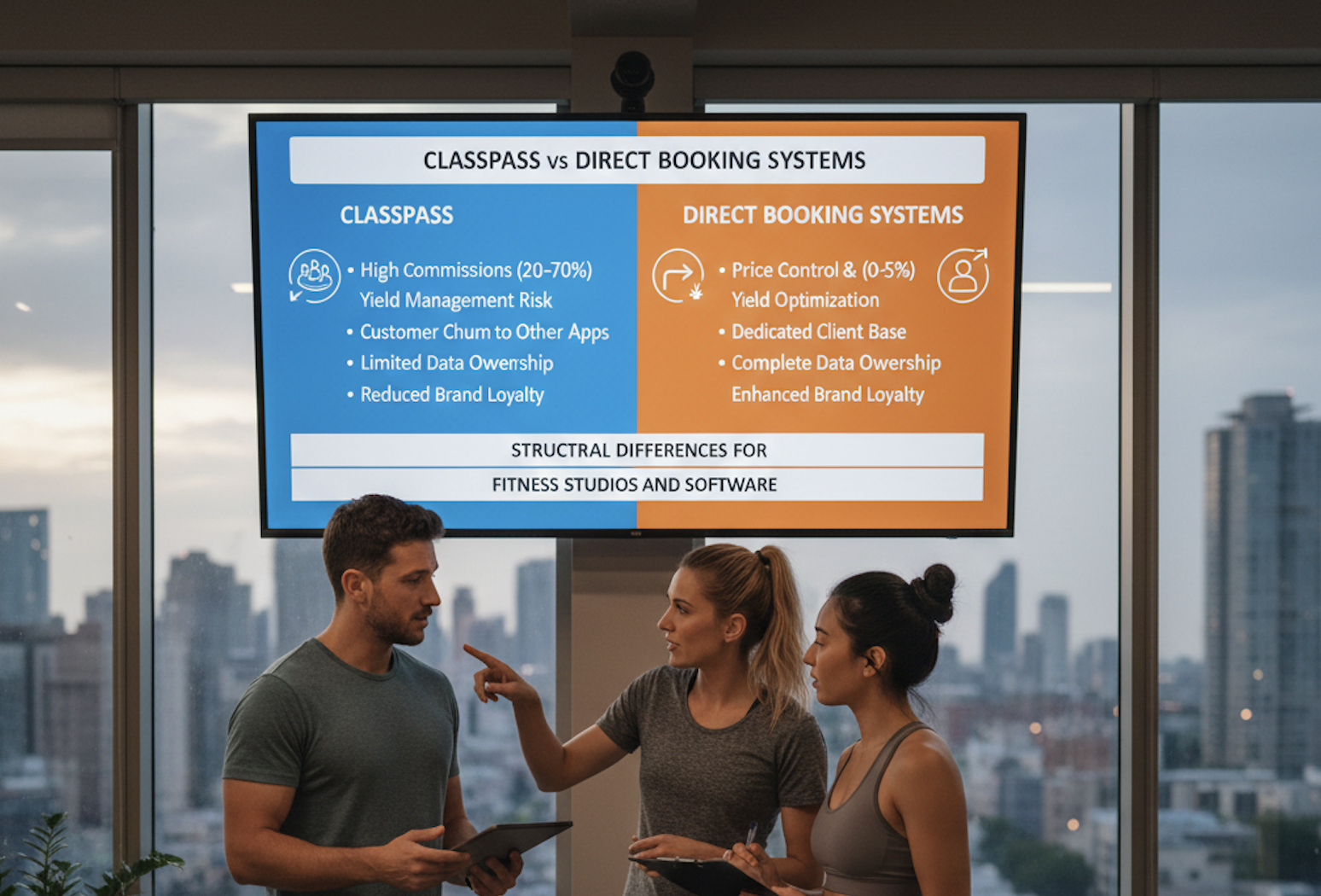
At some point, every fitness studio has to decide whether it is building its business on borrowed traffic or on relationships it truly owns. From there, the difference becomes clear. While both ClassPass and direct booking systems can bring people into classes, structurally they are built for very different outcomes.
One is a marketplace built around volume and discovery. The other is an operating system built for long-term studio growth.
As more studios look ahead to 2026, this distinction is driving serious conversations about where bookings should come from — and where control should live. Studio owners are increasingly searching for alternatives to ClassPass that allow them to own bookings, client data, and long-term relationships.

1. Who Owns the Client Relationship
The most important difference between ClassPass and direct booking systems is ownership.
With ClassPass:
- The platform controls the customer relationship
- Studios receive limited client information
- Restricted communication and follow-up
With direct booking systems like Vibefam:
- The studio owns client data and history
- Communication happens directly, without filters
- Relationships can grow beyond single visits
ClassPass can introduce new clients. However, direct booking systems like Vibefam allow studios to convert those introductions into long-term members through owned relationships.
2. Control Over Pricing and Revenue
ClassPass operates on a variable payout model.
That means:
- Studios don’t set final pricing
- Revenue per class can fluctuate
- Forecasting becomes harder
This model can work for discovery. However, as a result, it limits financial predictability for studios that rely on steady monthly revenue.
Direct booking systems like Vibefam give studios full control over memberships, class packs, drop-ins, and promotions. This control creates clearer margins, predictable income, and the ability to adjust pricing as costs change.
3. The Booking Experience and Brand Identity
When clients book through ClassPass, the experience belongs to ClassPass.
Over time, this difference affects how strongly clients associate their fitness routine with the studio itself versus the platform they booked through.
4. Short-Term Fill vs Long-Term Growth
ClassPass is effective for exposure and filling empty spots, especially in early stages. But it’s not designed to support:
- Evolving membership models
- Community events or workshops
- Hybrid pricing or loyalty programs
Direct booking platforms like Vibefam are built for flexibility. This is why many studios stop relying on ClassPass as their main booking channel. As studios grow and change, they need systems that grow with them — without limits set by a third-party marketplace.
Conclusion
ClassPass and direct booking systems solve different problems.
ClassPass can drive discovery. But long-term stability, brand control, and predictable revenue live in direct booking systems like Vibefam. As fitness studios plan for the future, more are choosing to build their business on platforms they control — using marketplaces strategically, not structurally.
The shift from marketplace dependency to owned booking systems is becoming a defining trend for fitness studios heading into 2026. For many, Vibefam has become that foundation.