

If you’re thinking about opening a Pilates studio in Singapore, you’ll find yourself in one of Asia’s friendliest places for new businesses, which makes the whole venture all the more exciting. As wellness becomes more popular among Singaporeans and the city’s regulations make things easier for new businesses, would-be studio owners can start up here with a lot more confidence than they might have in other places. This guide walks you through everything you need to know about starting a fitness business in Singapore, from figuring out ACRA registration to making sense of the local trends and competition that can make or break your studio.


Getting to Know the Pilates Scene in Singapore
Singapore’s fitness scene has taken off in recent years, with Pilates quickly becoming a favorite workout choice for locals who are serious about their health. People from all walks of life are flocking to Pilates these days, whether it’s busy professionals hoping to unwind after work or fitness fans searching for a gentler way to build strength. You’ll want to get a real feel for the local scene before jumping into any big business moves. If you’re hoping to open a studio, taking a closer look at what Pilates classes typically cost in Singapore can offer some helpful perspective:- Group mat class: ~$27.50 per session
- Reformer session: ~$45 per session
- Private session: ~$124 per session
Getting Your Business Legally Set Up in Singapore
Getting Your Business Registered with ACRA
Before you can open your doors, every Pilates studio in Singapore needs to get officially registered with the Accounting and Corporate Regulatory Authority, or ACRA. Going through this process sets up your business legally and gives you a Unique Entity Number (UEN), which is the official ID that every government agency uses to recognize your company. BizFile, ACRA’s online platform, has made the registration process much smoother and easier to navigate, whether you’re a local or coming in from overseas. Most studios go with a Private Limited Company because it offers solid liability protection and helps boost their credibility. The process via ACRA’s BizFile is straightforward and requires a resident director, local address, and business name reservation. You’ll need to:- Come up with a business name that’s one-of-a-kind, follows the official naming rules, and hasn’t already been claimed by someone else.
- Name at least one resident director.
- Set up a registered local address.
- Spell out exactly what your business will do.
Navigating Licenses and Meeting Regulations
One big plus of running a fitness studio in Singapore is that you don’t need any special licenses for gyms or Pilates classes. In contrast to places where you need special permits just to open a fitness studio, Singapore lets you get started as soon as your business is registered with ACRA. Because things are kept simple, you’ll spend less time tangled in paperwork and can get your studio up and running much faster. That said, there are still a few rules and regulations you’ll need to keep in mind, depending on what your studio offers and where it’s located:- Serving food/drinks: You’ll need extra permits from the right government agencies.
- Selling activewear/equipment: You must meet extra commercial licensing requirements.
- Planning permissions: The Urban Redevelopment Authority (URA) has zoning rules that determine where you’re allowed to open a fitness studio.
Choosing the Right Location and Navigating Zoning Rules
Making Sense of URA’s Planning Rules
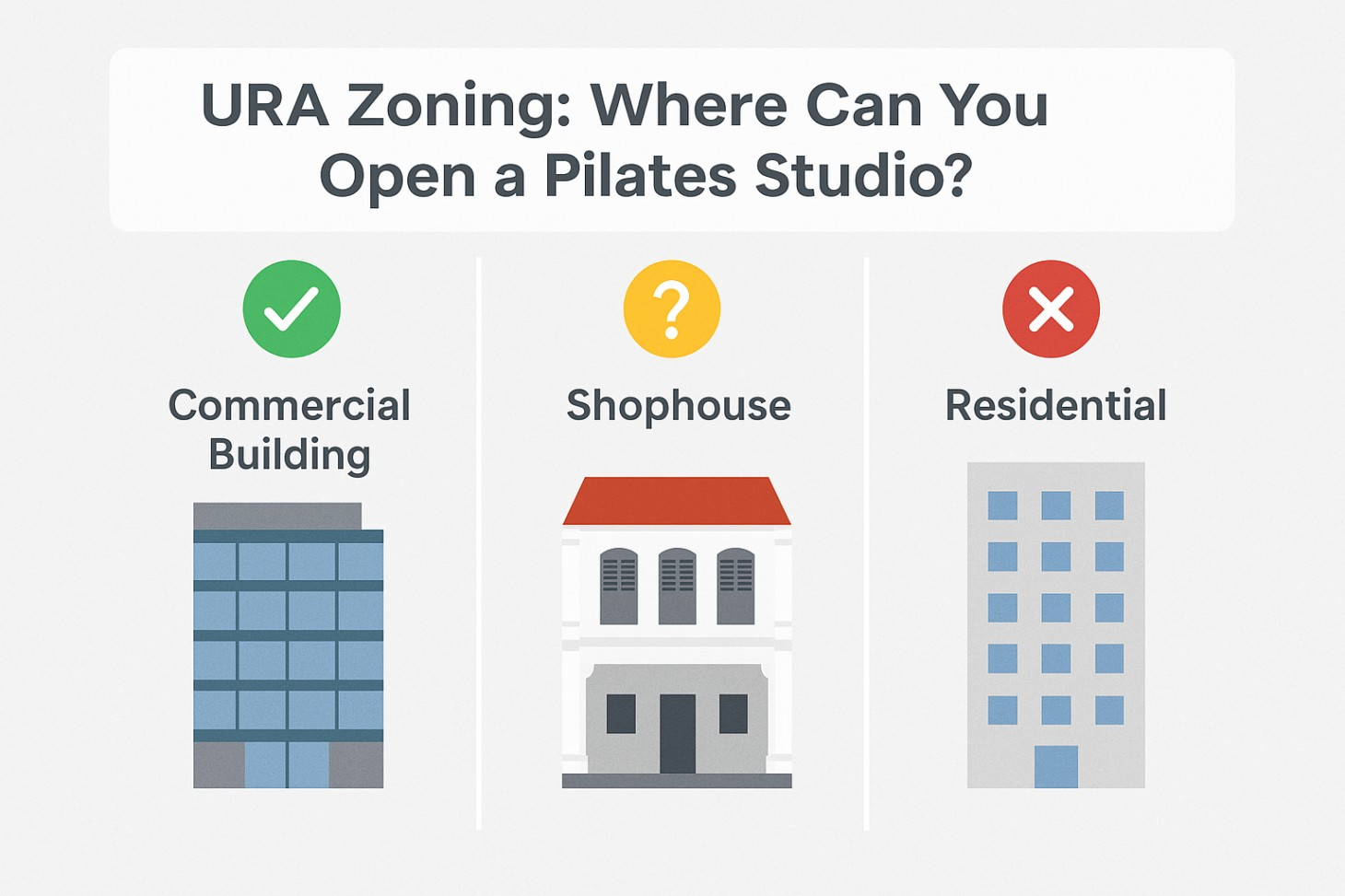
When you’re choosing a spot for your Pilates studio, you’ll need to work within the rules set by Singapore’s Urban Redevelopment Authority (URA), which spells out what kinds of businesses are allowed in different types of properties. These rules are in place to make sure land is used sensibly and that businesses in each area fit well together.- Commercial buildings are usually your safest bet, and many already have the green light for fitness businesses.
- Not every commercial building is a sure thing. Some will need you to apply for a change of use, and even then, the URA has to review your application.
- Shophouses can be another good option, but you’ll need to check each address on the URA website to make sure your business is actually allowed there.
How Much Space You’ll Need and What It’ll Cost
Navigating Singapore’s property market takes some serious financial planning, since rent will likely eat up a large chunk of your studio’s monthly expenses.- Prime spots (Orchard Road, Marina Bay): High rent, wealthy clientele, great public transport.
- Up-and-coming/less central neighborhoods: Lower rent, but still attract committed members.
- Each reformer: ~2.5 meters length x 68 cm width, plus extra space around
- Typical allocation: 15–20 sqm per reformer
What You’ll Need to Spend on Equipment and Getting Set Up
Choosing and Paying for the Right Reformer Machines
For most Pilates studios, reformer machines are by far the biggest equipment splurge:- Decent models: Start around $3,100
- Top-tier, professional models: $8,400+
- Example: Merrithew SPX Max Reformer Bundle costs $8,436.60
- Warranty
- Access to local servicing
- Potential for adding accessories (tower attachments, jumpboards)
Must-Have Accessories and Extra Gear
Reformer machines might be the stars of the show, but a great Pilates studio also relies on a mix of extra gear and accessories:- Yoga mats: ~$308 each for quality mats
- Resistance bands, exercise balls, Pilates rings: $20–$100 each
Finding and Hiring the Right Instructors
Finding the Right Pilates Instructors
For studio owners on the hunt for skilled instructors, Singapore’s Pilates scene is a mixed bag. It’s full of promising talent, but finding the right people can still be tricky.- Typical salary: $3,500–$6,000/month
- Average for experienced instructors: ~$4,200/month
- BASI
- Romana’s Pilates
- STOTT Pilates
Getting the Word Out and Attracting New Members
How to Market Your Studio Online in Singapore
With just about everyone in Singapore plugged in online, digital marketing isn’t optional. It’s a must if you want your Pilates studio to thrive.- Local SEO: Use location-specific keywords (e.g., “Pilates studio Orchard Road”)
- Google My Business: Keep contact details, hours, and reviews up-to-date
- Instagram and Facebook are go-to spots for fitness inspiration
- Share real client success stories, behind-the-scenes content, and instructor spotlights
- Team up with local wellness influencers
- Share helpful health and wellness tips
- Write blog posts addressing common concerns (e.g., Pilates for desk workers, injury prevention)
- Send emails with tips and special deals
How to Build a Loyal Community and Keep Members Coming Back
Singapore’s tight-knit mix of locals and expats creates the perfect setting for forging lasting connections. These are exactly the kind of relationships that help a studio thrive over the long haul.- Host events: Wellness workshops, nutrition talks, charity fundraisers
- Flexible memberships: Family deals, corporate wellness programs, membership pauses for travel
- Referral programs: Reward members for successful referrals (free session, merch, etc.)
- Exclusive perks: Early class bookings, special workshops, discounts at nearby wellness spots
Mapping Out Your Finances and Forecasting Revenue
Breaking Down the Costs of Getting Started
Be prepared for some hefty upfront costs:- Equipment: $15,000–$50,000
- Renovation/interior design: Varies widely
- Security deposit: 6–12 months’ rent upfront
- Professional services: Legal, accounting, insurance—several thousand dollars
- Marketing/website: Essential for launch
- Working capital: Cover 6–12 months of expenses
- Instructor training
- Retail product inventory
- Booking/payment tech systems
Ways to Boost Your Studio’s Earnings
Studios that branch out into other revenue streams tend to see steadier finances and more room to grow:- Private sessions: $124/hour
- Workshops, teacher training, certifications
- Corporate wellness programs: Bring classes to offices or offer corporate memberships
- Retail sales: Activewear, equipment, wellness products
- Pricing strategy: Charge higher prices for top-notch service, offer package deals for longer-term memberships, and review prices regularly to stay competitive and profitable.
Running the Day-to-Day Operations
What really sets thriving Pilates studios apart is having smooth, efficient systems running behind the scenes:- Booking/payment systems: User-friendly, automated reminders, smart waitlist management
- Staff scheduling: Balance member demand, instructor availability, and cost control
- Quality control: Regular class observation, member feedback, clear procedures
- Member records: Track progress, preferences, and special requirements for a personalized experience