


Singapore’s fitness scene is booming, and more people than ever are eyeing personal training as a rewarding career choice. Every year, the number of people looking for certified fitness professionals in Singapore increases by more than 10%. This trend is fueled by a health-savvy population and government efforts to get everyone moving. Maybe you’re thinking about changing careers, or perhaps you simply love the idea of helping others get fit. Either way, personal training in Singapore can be incredibly rewarding, both in terms of job satisfaction and your bank account.

What’s Behind the Personal Training Boom in Singapore
Singapore’s fitness scene has changed significantly, and growth is expected to continue. The market for sports and fitness products is projected to climb at an annual rate of 4.8% through 2034. According to recent figures, 74% of Singaporeans participated in at least one sports activity in 2022, which is an increase from 72% the year before. As more people in Singapore become health-conscious, and with the city’s mix of cultures combined with a strong focus on work-life balance, the personal training industry is thriving.
Moreover, the Health Promotion Board now requires trainers to hold exercise-related certifications that cover basic sports science. This requirement has raised industry standards, ensuring that only trained professionals can run fitness programs. It also creates more opportunities for certified trainers and reinforces quality expectations across the board.
Must-Have Certifications for Personal Trainers in Singapore
Globally Recognized Certifications
If you are aiming for the gold standard in personal trainer certifications in Singapore, the most respected ones are awarded by international organizations with rigorous standards.
American Council on Exercise (ACE):
A go-to option for many people starting out as personal trainers. Getting ACE certified will cost starting from $489 SGD, which includes a structured timetable, free sports science classes, and hands-on tutorials. ACE-certified trainers understand the science behind fitness and can design personalized workout plans tailored to each client’s goals.
National Academy of Sports Medicine (NASM):
A respected certification that starts at $699 SGD. NASM is known for producing top personal trainers, with a digital platform that delivers up-to-date, science-backed information.
International Sports Sciences Association (ISSA):
Offers flexible online learning that fits around your schedule, starting from $69/month. ISSA provides not just a textbook but also guidebooks, audio lectures, phone support, business tools, and continued learning opportunities.
National Council on Strength & Fitness (NCSF):
Known for its thorough training, with more than 4,000 Google reviews. If you are eligible for SkillsFuture credits, you might pay as little as $89. The program includes online lessons and in-person workshops, covering topics such as workout programming, resistance training, and legal responsibilities.
Homegrown and Government-Backed Choices
Workforce Skills Qualifications (WSQ)
This national training framework provides hands-on, job-focused training with no academic prerequisites. WSQ fitness certifications are officially recognized and tailored to Singapore’s fitness industry standards.
Basic Exercise Science (BES) Certification
From June 2026 onward, all trainers registered with the National Registry of Exercise Professionals (NREP) must have a BES certification or an equivalent. This ensures trainers have a solid grasp of anatomy, physiology, nutrition, and exercise techniques.
Certification Costs and Funding
The cost of becoming a certified personal trainer in Singapore varies based on the provider and program depth.
- NCSF courses: Approximately $700 for the course and exam, plus $299 for materials. Early sign-ups and SkillsFuture funding can reduce this cost.
- ACE certification: Local providers charge around $1,500 SGD.
- Exam fees: Most international certifications have separate exam fees. For example, ACE charges $399 USD (about $549 SGD) per attempt.
Tip: Always budget for both course and exam fees to avoid being caught off guard by hidden costs.
Career Paths for Personal Trainers in Singapore
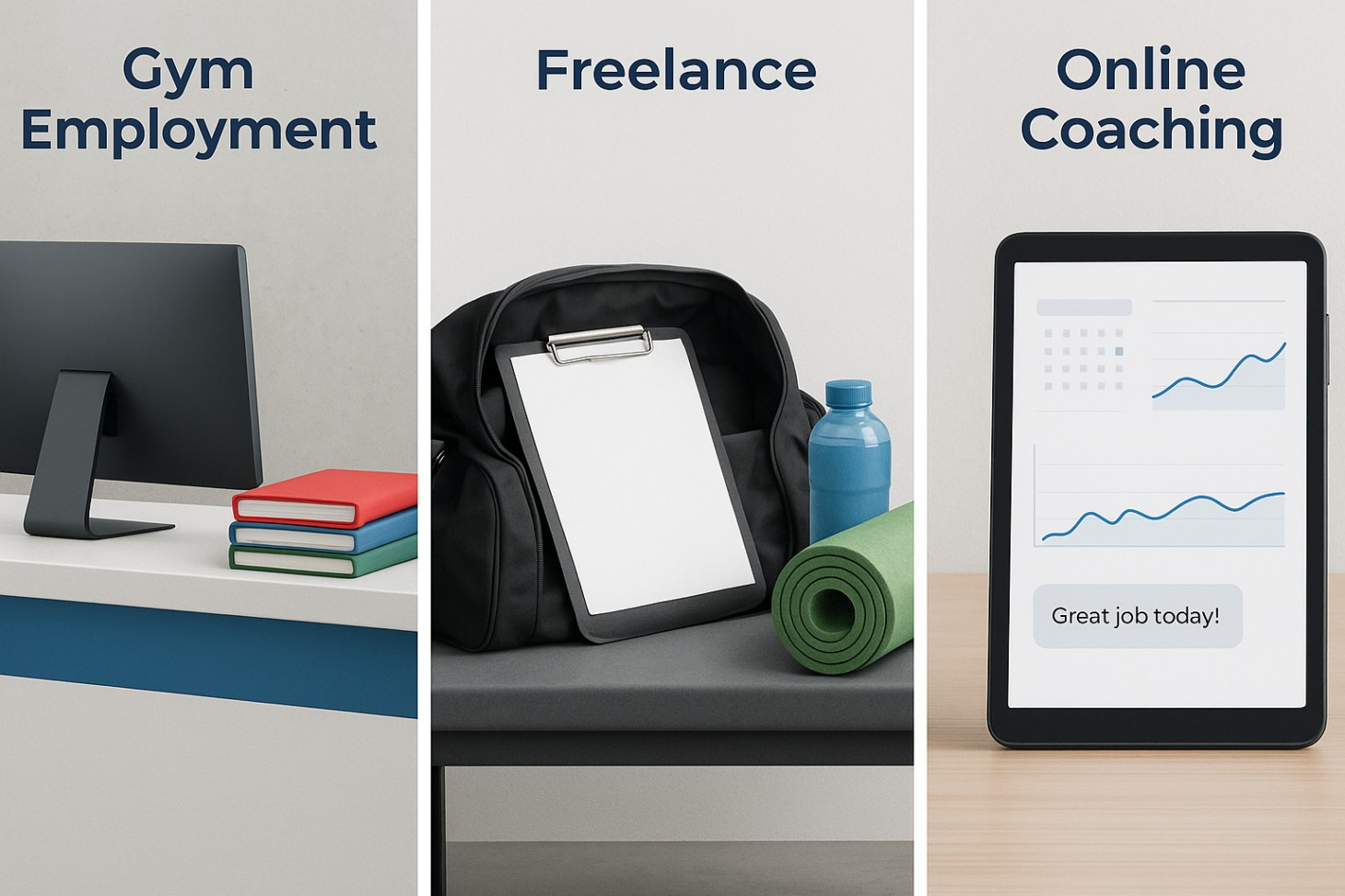
Working as a Trainer at a Gym
Taking a job at a gym offers a steady client base and support with marketing and admin, although gyms usually take a significant commission. Companies like Athleaders regularly hire certified trainers, offering base pay plus commissions. Most employers require certifications such as ACSM, NASM, NCSF, or ACE, along with CPR/AED certification.
Hence, gym-employed trainers benefit from established client pipelines, marketing support, and administrative assistance. This makes this path ideal for new trainers building experience and confidence.
However, commission splits can significantly impact earnings, with gyms typically taking 30-50% of session fees.
Freelance Personal Training
Independent personal trainers enjoy greater earning potential and flexibility but must develop their own client base and handle all business aspects like admin and marketing. If you are looking to be a freelance trainer, you can consider operating from fixed locations like hotel gyms or private facilities, paying monthly fees for space and equipment access.
The advantages of freelance training include choosing your own clients, setting your own hours, and keeping all revenue after expenses. However, this comes at the cost of recurring fixed costs, marketing responsibilities, and the challenge of consistent client acquisition.
Online Coaching and Digital Services
The digital fitness trend has accelerated, with technology-driven fitness solutions becoming increasingly popular among Singaporeans. Online personal training allows trainers to serve clients beyond geographical limitations while offering flexible scheduling options.
Digital coaching platforms enable trainers to provide workout plans, nutrition guidance, and progress tracking through mobile apps and video calls. This model offers excellent scalability potential, allowing successful trainers to serve multiple clients simultaneously.
How Much Can Personal Trainers Really Earn?
Salaries for Employed Trainers
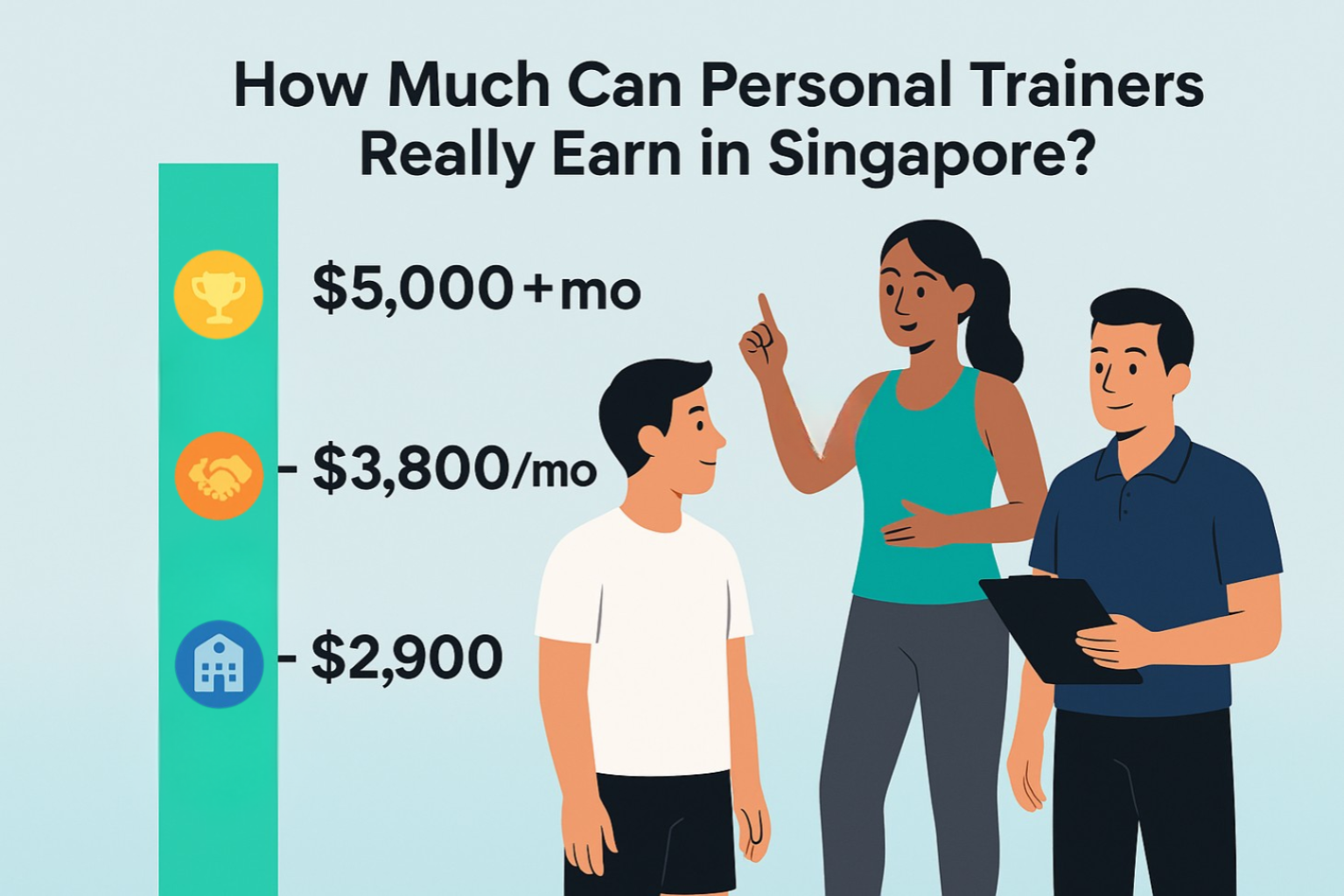
Personal trainers working at gyms or fitness centers earn between $2,900 and $3,800 per month, while the average is around $3,065. Annual salaries can range from $25,800 to $51,600 depending on many factors such as experience, certifications and the company.
For those who have just gotten started, the amount they earn will usually be on the lower end of the range, while experienced trainers that have specialised certificates as well as strong relationships with their existing clientele can earn even more. Location plays a huge role as well, with trainers who teach in the Central areas will have higher rates.
Earning Potential for Freelancers
Independent trainers have greater earning potential through their direct client relationships. Current session rates in Singapore typically range from $60 to $180 per hour, with the average Singaporean spending around $75 per session.
New freelance trainers typically start from $50-60 per hour in order to gain experience, while experienced trainers with established reputations can charge upwards of $90-120 per hour. Building a strong client base and developing expertise will allow trainers to command premium rates in the long run.
What Affects Your Income as a Trainer?
- Certification level and specializations will significantly impact rates, with NCCA-accredited certifications typically commanding higher fees.
- Location matters, as trainers working in premium areas or high-end facilities can charge more than those in neighborhood gyms.
- Client demographics also affect earning potential, with corporate clients and affluent individuals typically paying higher rates for specialized services. Building expertise in specific areas like sports performance, corrective exercise, or nutrition coaching allows trainers to differentiate themselves and justify premium pricing.
How to Become a Personal Trainer, One Step at a Time
- Choose your certification path Select a program that fits your style, budget, and goals. Consider local recognition and exam fees.
- Complete all course requirements
Most programs require 40–80 hours of study. Use mock exams and study groups to prepare. - Earn additional certifications
Get your CPR/AED certification and consider specializations to expand your skill set. - Gain practical experience
Internships, volunteering, or starting at a gym help build experience and credibility. - Strengthen your business skills
Learn marketing, client management, and relationship-building.
Curious to dive deeper? Explore Vibefam’s full library of resources to grow your fitness business.
Pitfalls New Trainers Should Watch Out For
- Lack of focus: Choose a niche and build real expertise.
- Skipping assessments: Always conduct proper fitness evaluations.
- Improvising workouts: Use evidence-based plans with structure.
- Changing routines too often: Let clients master basics before adding variety.
- Neglecting ongoing education: Stay updated with workshops and recertification.
How to Grow Your Client List: What Actually Works
- Define your ideal client: Think age, goals, lifestyle, and budget.
- Network locally: Connect with fitness associations and industry pros.
- Use digital tools: Build an online presence and share value-added content.
- Specialize:Consider areas like senior fitness, corporate wellness, or sports training.
What’s Changing in Singapore’s Fitness Scene?
- Tech integration: Wearables, apps, and virtual workouts are now standard.
- Holistic wellness: Trainers with lifestyle or stress management skills are in demand.
- Corporate wellness: Companies are investing in fitness programs for employees. Trainers who can design and lead these programs stand to benefit.
Frequently Asked Questions
Q: How long does it take to get certified?
Most programs take between two and eight weeks to complete, depending on the pace of study. Gaining hands-on experience and building a client base usually takes six to twelve months.
Q: Is a degree required?
No, most certifications do not require a university degree. However, a background in sports science can be beneficial.
Q: How are WSQ certifications different?
WSQ is Singapore-specific and focuses on practical skills, while ACE or NASM are globally recognized and more theory-heavy. Many trainers pursue both for broader appeal.
Q: Can foreigners become personal trainers in Singapore?
Yes, as long as they have the correct work permits. However, funding options like SkillsFuture are limited to Singaporeans and PRs.

What the Experts Really Think
Top trainers in Singapore say certification is just the beginning. Long-term success depends on running your business effectively and building strong relationships with clients. Trainers who combine technical knowledge with empathy and adaptability are the ones who truly stand out in this competitive field.
Your Personal Trainer Career Action Plan
- Choose a certification program based on your budget and goals
- Budget for full costs, including exam fees
- Obtain your CPR/AED certification
- Get hands-on experience through entry-level roles or internships
- Identify your niche and ideal client
- Build your network and online presence
- Learn how to market yourself and run your business effectively
Singapore’s fitness industry offers excellent prospects for those who are well-prepared and passionate. Whether you go freelance or work for a gym, your success will depend on your willingness to keep learning and your ability to serve clients well.
Ready to turn your fitness passion into a profitable business?
Start your free 7-day trial with Vibefam today and discover how hundreds of personal trainers have grown their revenue by over 200% using our all-in-one platform designed for Singapore’s fitness market.