


As boutique fitness studios and independent gyms expand across Asia, operators face a common challenge. Managing operations efficiently without overspending. From class scheduling and client management to payment processing and reporting, a robust software solution is essential for daily success. However, many global platforms are expensive, overbuilt for small businesses, or fail to support local payment methods.
This guide explores how to choose affordable gym management software with local payment integration in Asia, so you can streamline operations and stay focused on growing your studio.

Why gym management software is critical for fitness studios in Asia
Managing a modern fitness business involves more than running classes. Studio owners must coordinate schedules, manage client subscriptions, process payments, monitor attendance, support staff, and maintain client communication. As the industry becomes more digitised, client expectations have shifted because members now expect mobile booking, flexible payment options, real-time updates, and seamless experiences.
Without suitable software, studio owners often rely on spreadsheets, messaging apps, and manual processes. These temporary fixes may work, but in the long term, they will quickly result in missed bookings, duplicate entries, payment delays, and significant administrative strain. Gym management software addresses these challenges by consolidating essential operations into a single, integrated platform. Gym management software is no longer optional. It is fundamental infrastructure for boutique fitness studios seeking automation, improved customer experience, and sustainable growth.
How large and fast-growing is the Asia fitness market and boutique segment?
The Asia-Pacific fitness equipment market is projected to grow at a CAGR of 8.1% by 2030, showcasing the region’s rapid expansion and opportunity for studio owners. Additionally, Southeast Asia’s overall health and fitness club market is estimated at USD 2.68 billion in 2025 and is expected to reach USD 4.19 billion by 2030. Boutique studios are flourishing globally too, and this segment is estimated to grow from USD 40 billion in 2024 to USD 80 billion by 2034, at a 7.2% CAGR. The fitness industry in Asia is expanding rapidly, with boutique studios playing a significant role in market growth.
What defines “affordable” when evaluating budget-friendly gym management platforms?
Affordability goes beyond the base subscription price. Studio owners should account for:
Monthly or annual fees:
The core cost of software can vary widely. Look for providers with pricing in your local currency and clearly tiered plans.
Setup or onboarding costs:
Some platforms charge for initial setup, training sessions, or platform migrations. Ensure these are transparent.
Transaction fees for payment processing:
Even if subscription costs are low, high transaction charges can erode margins. Prioritise solutions with integrated local gateways.
Time spent on training and support:
Hidden time costs, such as onboarding, troubleshooting, or waiting on support, can impact team productivity.
Many international platforms charge in USD and offer features aimed at large gym chains, which makes them costly or excessively complex for smaller studios in Asia. Some platforms also conceal key functionality behind expensive add-ons. A software solution that is both affordable and valuable allows studios to access essential tools without overpaying for features they will not use.
If you are looking for a platform that helps you save on admin hours while offering full integration with local payment gateways, take a closer look at how Vibefam supports boutique studios across Southeast Asia.

Why local payment integration matters in the Asian fitness industry
Asia is home to a diverse array of payment preferences. For example, in Singapore, PayNow and GrabPay are widely used. In Malaysia, FPX dominates. In Indonesia, GoPay and bank transfers are common. Platforms that only accept credit cards introduce unnecessary friction at checkout.
Local payment integration improves client experience, reduces booking drop-off, and streamlines reconciliation. Providers like this integrate with regional payment systems entirely within one solution. Vibefam integrates with PayNow, GrabPay, Alipay, Apple Pay, and other Southeast Asia-relevant methods, which reduces cart abandonment and enhances checkout convenience. Integrating local payment options ensures smoother client journeys and quicker payments, which directly improves revenue and retention.
If you are exploring how to simplify bookings, payments, and client management without overspending, consider reviewing how Vibefam’s affordable gym management software supports boutique studios in Singapore, Malaysia, Indonesia, and beyond. You can try a free walkthrough to see if it fits your workflow.
Understanding regional differences in payment preferences across Southeast Asia
While affordability and digital transformation are consistent themes, payment behaviour differs widely across Southeast Asia. Understanding these preferences helps studios better serve their markets and avoid payment friction.
- Singapore: PayNow is used by more than 80% of consumers. It is widely adopted and preferred over credit cards.
- Malaysia: FPX is a dominant bank transfer system, ideal for automated recurring payments.
- Indonesia: GoPay and OVO lead mobile payments. Studios must support these to stay relevant to younger users.
- Thailand: PromptPay enables seamless QR-based payments between banks and apps.
A gym management system must adapt to these differences and integrate with local APIs or gateways to ensure frictionless transactions.
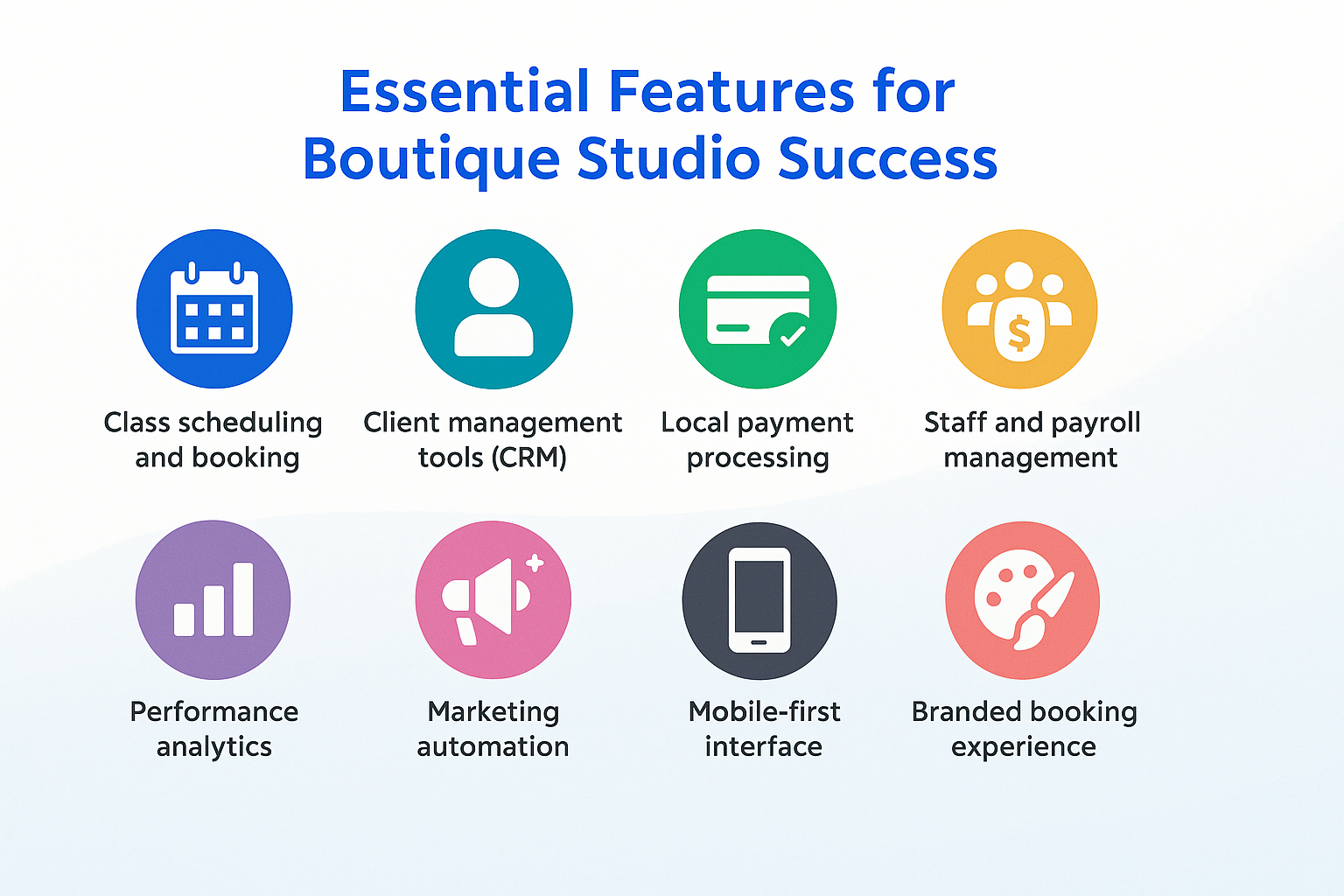
Which features are essential in gym management software for boutique studios?
Different studios have unique needs, but the following features are widely considered essential:
- Class scheduling and booking: Enables clients to book classes online, view availability in real-time, and join waitlists automatically.
- Client management tools (CRM): Provides detailed client profiles, class histories, pass usage, and engagement data to help build long-term relationships.
- Local payment processing: Supports region-specific options like PayNow, GrabPay, FPX, and GoPay to offer clients a seamless payment experience.
- Staff and payroll management: Tracks instructor hours, class assignments, and automates payroll calculations.
- Performance analytics: Offers dashboards and reporting tools to monitor attendance, revenue, client retention, and package usage.
- Marketing automation: Sends automated email or SMS reminders, promotes class packages, and enables referral tracking.
- Mobile-first interface: Ensures smooth usability for both clients and staff on smartphones, which is critical in mobile-first markets.
- Branded booking experience: Allows studios to customise booking pages and app layouts to match their brand and build trust.
Is there a gym software built for boutique studios in Southeast Asia?
Yes, Vibefam is designed specifically for boutique fitness businesses in Southeast Asia. Unlike generic global platforms, it supports local currencies, language settings, and payment methods. It also avoids the complexity and high cost associated with enterprise-focused gym software.
For example, a yoga studio in Kuala Lumpur can enable FPX and multi-class packages, while a pilates studio in Singapore can use PayNow for quick mobile transactions. This regional adaptability makes Vibefam a natural fit for small to mid-sized studios looking for simplicity, affordability, and results.
Step-by-step framework for selecting the right gym software
- Define your top challenges: Identify whether your biggest pain points are scheduling inefficiencies, late payments, or client churn.
- List must-have features: Prioritise features such as automated bookings, payment integrations, and mobile access based on your studio type.
- Check local compatibility: Confirm whether the software integrates with the preferred payment methods in your country.
- Compare total cost: Evaluate not just subscription fees but also transaction costs, onboarding, and support.
- Take advantage of free trials: Test usability, setup speed, and mobile functionality from a client’s perspective.
- Assess support and updates: Choose a provider with responsive support and regular product improvements.
Following this process ensures that you select a platform that fits your workflow, saves time, and grows with your business.
Common mistakes to avoid when choosing gym software
Overbuying features:
Picking software built for massive gym chains often means paying for extras you will never use. It can also add unnecessary complexity and make the platform harder for both staff and clients to get comfortable with.
Ignoring payment support:
If your system does not support local payment options like PayNow or FPX, you risk frustrating clients at checkout. This can lead to missed payments, abandoned bookings, and a poorer overall experience.
Treating mobile access as optional:
In Asia, most people use their phones for almost everything, including booking classes. Without a mobile-first design, you could alienate clients who expect quick, smooth access on their devices, and this can mean fewer bookings.
Skipping onboarding evaluations:
A platform may look impressive in a demo but still be tricky to set up. Testing the onboarding process helps ensure you can roll it out quickly and smoothly without wasting time or money.
Choosing based on branding:
Well-known global tools might look appealing but are not always tailored to your local market. They may lack support for your regional payment systems, languages, or client preferences.
Frequently asked questions
1. Can affordable gym software support multiple locations and instructors?
Yes. Platforms like Vibefam are scalable and support multiple user logins, access roles, and studio branches within one account.
2. How quickly can I get started?
Most users can get up and running within 24 hours. Vibefam offers onboarding assistance and live support to help you import data and configure your schedule.
3. Can I brand the booking page with my studio’s identity?
Yes. Vibefam allows you to customise your booking page with your logo, colours, and messaging to provide a seamless brand experience.
4. Does the software help me retain clients?
Yes. With features like attendance tracking, reminders, package expiry alerts, and re-engagement prompts, the system helps increase retention.
5. What happens if I want to change pricing plans later?
You can upgrade or downgrade your plan based on usage. Vibefam offers flexible tiers so you can scale as your studio grows.
6. Will my clients find it easy to use?
Yes. The client-facing interface is designed to be mobile-friendly, intuitive, and quick to load, even for first-time users.
Conclusion
Choosing the right gym management software is not just about finding a platform that works. It is about selecting one that aligns with your business model, fits your regional context, and grows with your studio’s ambitions.
Affordability must include both price and practicality. The right solution should offer essential features without forcing you to pay for unnecessary complexity, and it must support the way your clients actually pay in their respective markets.
Vibefam is purpose-built to meet the needs of boutique studios across Asia. It provides a practical, low-cost platform with seamless integration into local payment systems, intuitive class scheduling, and robust client management tools. For fitness entrepreneurs looking to reduce admin workload and create a smoother experience for their community, Vibefam is a solution worth exploring.
If you are ready to simplify your operations, streamline payments, and focus on growing your studio, Vibefam to learn how their tools can help you get started.