

A 200-hour Yoga Alliance-recognized teacher training typically costs $1,200 to $5,000 and takes one to six months depending on format. Here's the full path: what certification you actually need, what it costs, how long it takes, what instructors get paid, and where to find the specific requirements for your state or specialization.
How Much Does Yoga Teacher Training Cost?
A 200-hour yoga teacher training (YTT), the entry-level certification most studios require, typically costs $1,200 to $5,000 in the US, per 2026 YTT pricing research. Self-paced online programs run as low as $199 to $1,000; live online training with scheduled sessions runs $2,000 to $3,500; in-person studio trainings typically run $2,000 to $5,000 or more; retreat-style programs abroad can reach $3,800 to $7,000 once lodging and meals are included.
| Training level | Typical cost | Typical duration |
|---|---|---|
| 200-hour YTT (RYT-200) | $1,200–$5,000 | 1–6 months, depending on format |
| 300-hour advanced training | $1,500–$4,000 | Several months to a year, often part-time |
| 500-hour combined (RYT-500) | $3,000–$8,000+ | 200-hour plus 300-hour combined, 6 months–2 years |
The format you choose changes the cost more than the school does, online self-paced is the cheapest way into a Yoga Alliance-recognized certification, while an in-person or retreat-style training costs more but adds structured mentorship and in-room teaching practice most self-paced formats can't fully replicate. [NEEDS VERIFICATION, re-check current program pricing before advising a specific student, program pricing shifts and varies by school]
How Long Does It Take to Become a Yoga Instructor?
A 200-hour YTT takes one month full-time (common for retreat-style intensives) up to six months part-time (common for weekend or evening programs at a local studio). Most aspiring instructors in the US complete their 200-hour certification in two to four months.
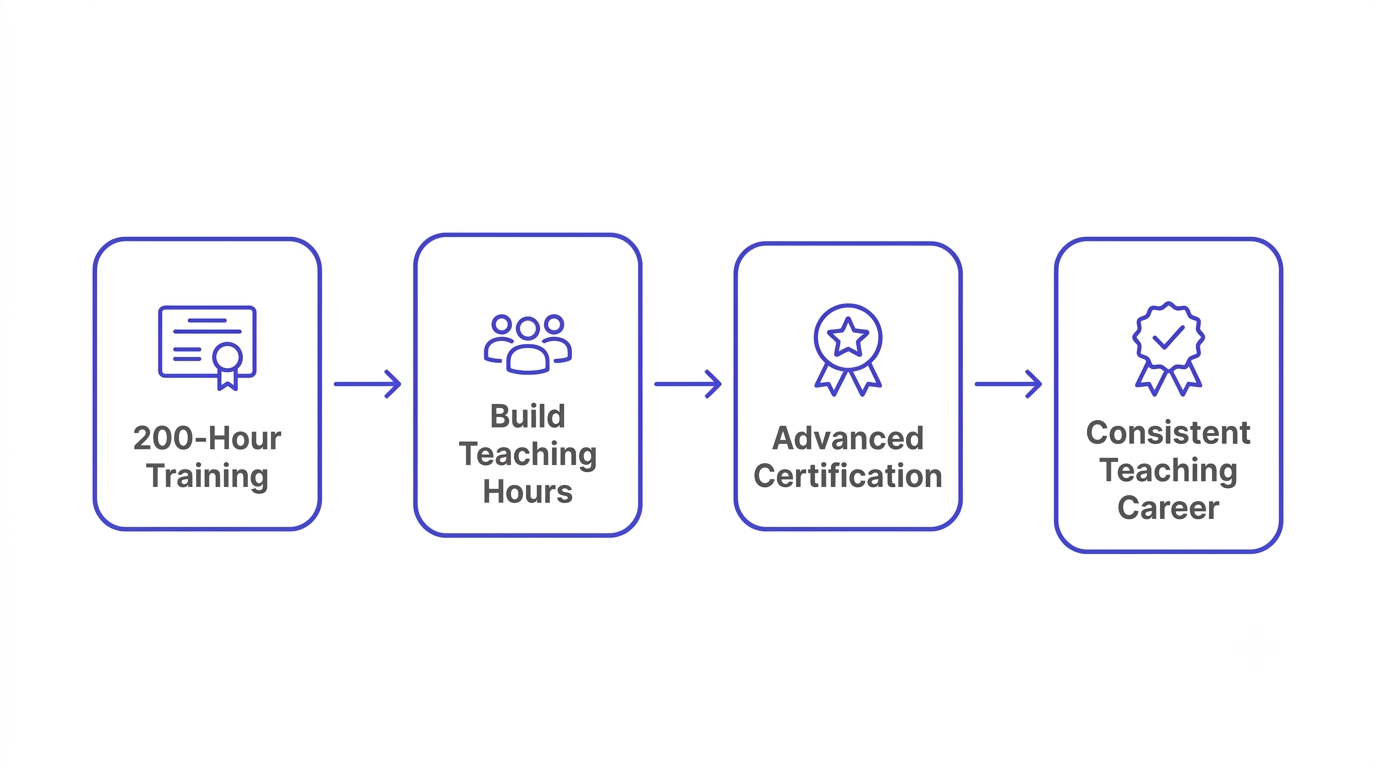
The certification itself is only part of the timeline, most new instructors spend an additional few months after certification building teaching hours and confidence before landing a regular studio slot. Budget six months to a year from your first training inquiry to a consistent paid teaching schedule, not just the training program's own stated length.
What Certification You Actually Need
In the US, most studios look for a Yoga Alliance-registered certification, RYT-200 (200-hour) at minimum, since it's the most widely recognized credential across studios nationwide and it's what most studio hiring criteria default to. A 200-hour program covers anatomy and physiology, sequencing and class planning, and teaching technique and communication.
Beyond the 200-hour minimum, instructors often pursue 300-hour advanced training or a combined RYT-500, plus specialty certifications in prenatal, restorative, yin, or trauma-informed yoga. Specialization widens the range of studios and class formats you can teach, and it's often what separates a part-time teaching schedule from a full one.
How Much Do Yoga Instructors Get Paid?
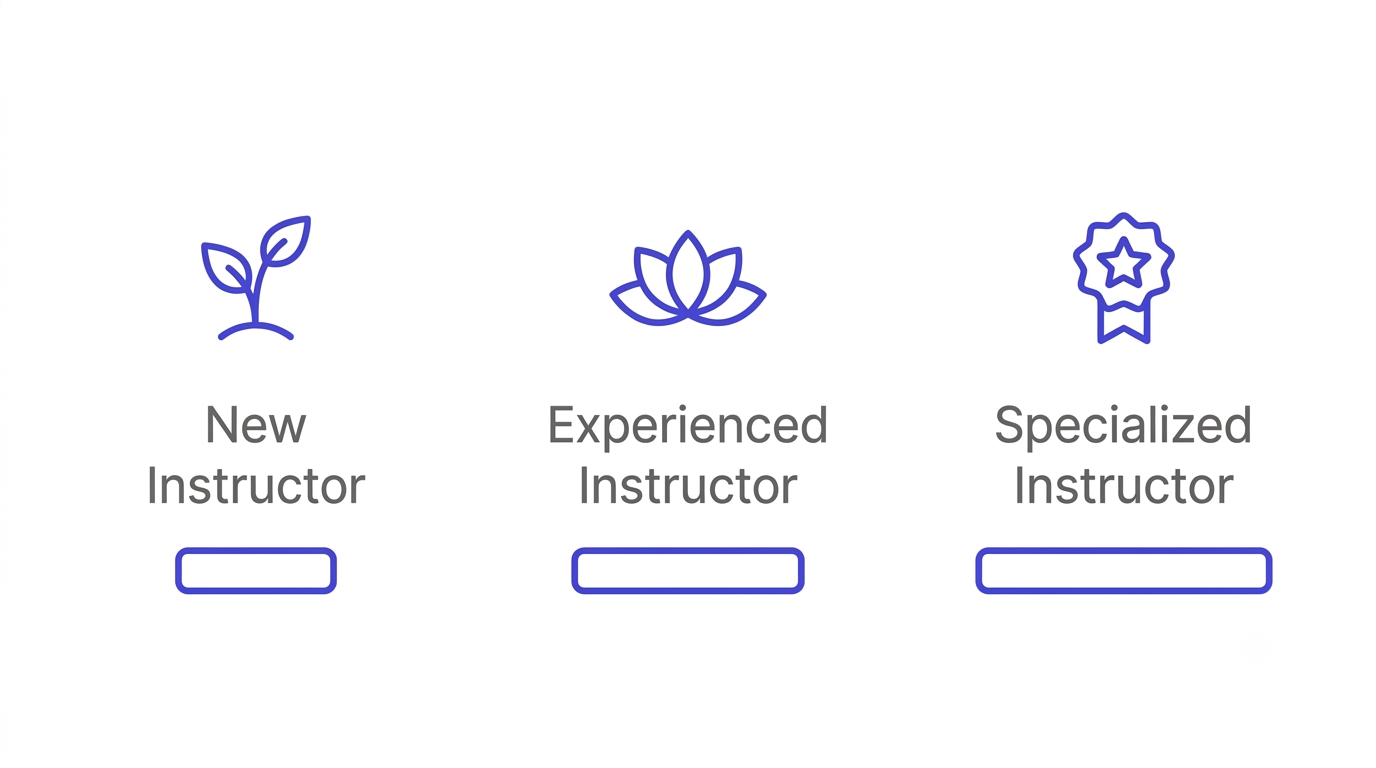
BLS Occupational Outlook Handbook groups yoga instructors under fitness trainers and instructors, with a median annual wage of $46,180 as of May 2024. Per-class rates for yoga specifically run $30 to $75 a class depending on studio, city, and experience level, with newer instructors at the lower end and specialized or high-demand instructors at the higher end.
Full-time equivalent pay estimates vary widely across salary sites, from roughly $51,000 to $76,000 a year, reflecting how differently each site samples full-time studio employees versus part-time freelance teachers. [NEEDS VERIFICATION, treat any single annual figure as directional only, most yoga teaching income is class-rate based, not a fixed salary]
Where Are You Teaching? Requirements and Costs Vary by Location
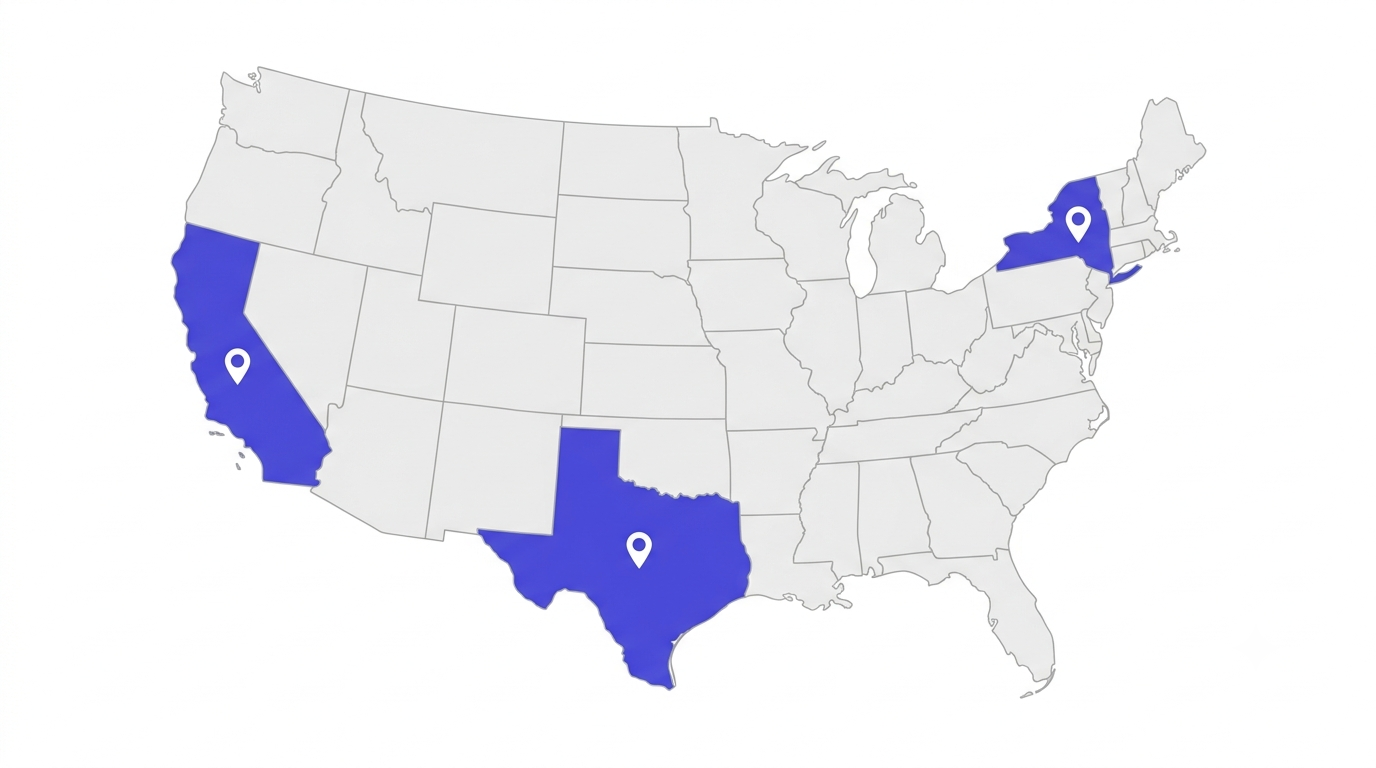
Certification requirements are largely consistent nationally through Yoga Alliance, but studio hiring norms, training program availability, and cost of living all shift by market. If you're planning to teach in a specific city or state, the local guide is worth reading before you enroll: Texas, New York City, and California each have their own studio market dynamics worth understanding before you pick a program. Teaching outside the US? See the Singapore guide for that market's certification and studio landscape.
Considering a specialized format instead of, or alongside, traditional yoga? Lagree certification follows a similar cost-and-timeline structure but leads to a different studio market with its own demand curve. In our observations supporting boutique studios across North America and APAC, instructors who research their specific local market's studio density and specialization demand before committing to a training program end up with a faster path to consistent paid teaching hours than those who train first and figure out the local market after.
What's Next After Certification?
Certification opens the door, but a sustainable teaching career comes from what happens after: building real teaching hours, developing a consistent style, and understanding how the studios you want to teach at actually operate. Most new instructors start part-time across a few studios before settling into a more consistent schedule, whether that's full-time at one studio, a freelance mix of studio and private classes, or eventually workshops and retreats of their own.
In our observations supporting boutique studios across North America and APAC, the instructors who transition most smoothly into a full teaching career, and the ones who eventually open their own studio, are the ones who pay attention early to how a studio's day-to-day operations work: scheduling, member communication, and how instructor pay actually gets calculated, not just the teaching itself. If you're carrying liability as an independent instructor, yoga studio insurance coverage is worth understanding early, before you're teaching regularly. And for instructors who eventually open their own studio, Vibefam offers comprehensive software across operations and marketing built for boutique yoga operators, class scheduling, recurring memberships, and an AI marketing and retention engine, with one-hour onboarding on every plan.