

Opening a fitness studio is a business decision before it's a passion project, and the studios that struggle in year one are usually the ones that skipped the boring parts: a realistic startup budget, the right license and insurance paperwork, and a location chosen for lease terms instead of vibes. This guide walks through what actually needs to be locked down before you sign a lease or take your first booking, not a motivational list, an operating checklist.
How Much Money Do You Need to Open a Fitness Studio?
Total startup cost depends heavily on format and market. A small studio in a shared space costs far less to open than a full build-out with specialized equipment, but every fitness studio budget breaks into the same six buckets: lease deposit, buildout and renovation, equipment, software and payments setup, insurance, and a marketing reserve for the months before word of mouth kicks in.
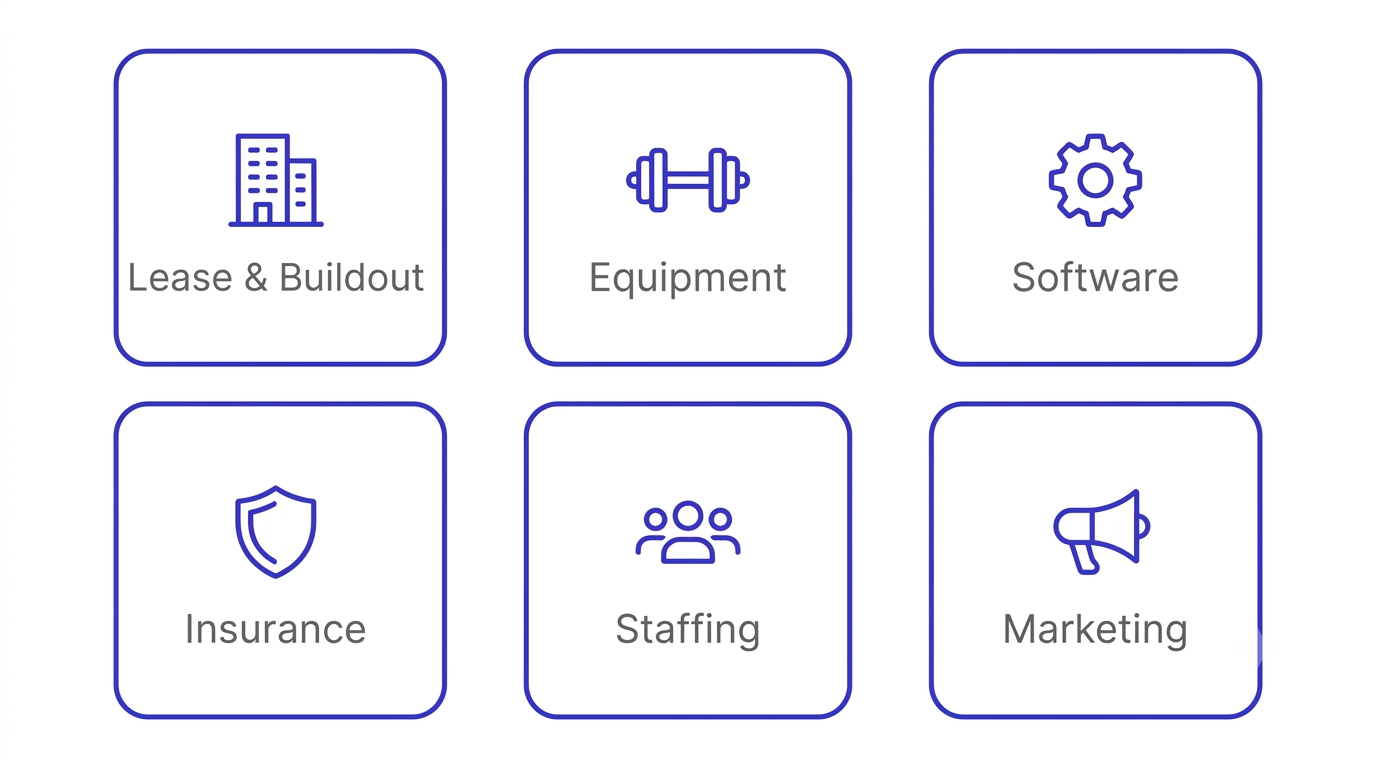
| Cost bucket | Type | What drives the range |
|---|---|---|
| Lease deposit & buildout | One-time | Location, square footage, how much renovation the space needs before it's usable |
| Equipment | One-time, plus replacement over time | Studio format, buying new vs. used, whether it needs specialized flooring or power |
| Studio management software | Recurring, monthly | Which features you need on day one (booking, payments, branded app) vs. add later |
| Insurance | Recurring, annual or monthly | Local requirements and studio format, higher-impact formats often cost more to insure |
| Staffing before you have members | Recurring, monthly | Whether you teach every class yourself at first or hire from day one |
| Opening marketing reserve | One-time, upfront | How much runway you want before referrals and word of mouth carry acquisition |
Buildout and the marketing reserve are the two most commonly underestimated lines. Renovation timelines slip more often than they hold, and studios that budget zero for marketing until they're already open tend to open quiet. In our observations supporting boutique studios across North America and APAC, the first-time owners who underprice this list almost always underprice the marketing reserve first, since it's the easiest bucket to assume will take care of itself. For a fuller breakdown by studio type, this cost guide walks through the numbers in more depth.
What Licenses and Insurance Do You Need?
Every fitness studio needs a registered business entity, general liability and fitness-specific liability insurance, and a local business license or permit before opening to the public, though the exact requirements vary by city, state, and country, so confirm the current rules with your local authority or a business attorney rather than relying on a generic checklist.
Beyond the basics, check whether your space needs a separate occupancy or fire-code inspection. Fitness studios often trigger a different code category than general retail because of equipment load, class capacity, and, for some formats, specialized flooring or ventilation. Confirming this before you sign a lease avoids a costly surprise mid-buildout.
Choosing a Location That Sets Your Studio's Ceiling
Location determines your competition, your pricing power, and your peak-hour demand more than almost any other early decision, and four things are worth checking before you sign anything: foot traffic versus destination positioning, lease flexibility as you grow, and whether the buildout is move-in ready or needs real construction.
A generalist gym usually needs foot traffic to survive. A specialized boutique studio, reformer Pilates, a specific martial art, an indoor cycle format, can work as a destination, since clients already know what they're driving to and don't need to stumble past your storefront to find you. If you're evaluating a specific market, starting a boutique studio in Singapore covers location and market dynamics specific to that city.
Should You Build a Niche or a Generalist Studio?
Specializing in one format gives a new studio a clear reason for someone to choose it over a bigger, more established gym nearby, since depth in a single modality is easier to market and staff for than trying to be a generalist competing on breadth against businesses with a decade's head start.
A single-modality studio, one format done well, a specific class length, a defined demographic, gives you a sharper story for marketing and word of mouth than "a gym with a bit of everything." Thinking through the fitness-business decision itself is worth reading before you commit to a niche, since the right specialization depends on what you actually want to run day to day, not just what's trending.
What Should Be on Your Pre-Launch Checklist?
A pre-launch checklist keeps the dozens of small decisions from turning into dropped balls in the final weeks before opening, and it matters more than a motivational to-do list because most of these items have external lead times you can't rush at the last minute. In our observations supporting boutique studios across North America and APAC, equipment delivery and software setup are the two items first-time owners leave latest and regret most. At minimum, confirm these before you set a public opening date:
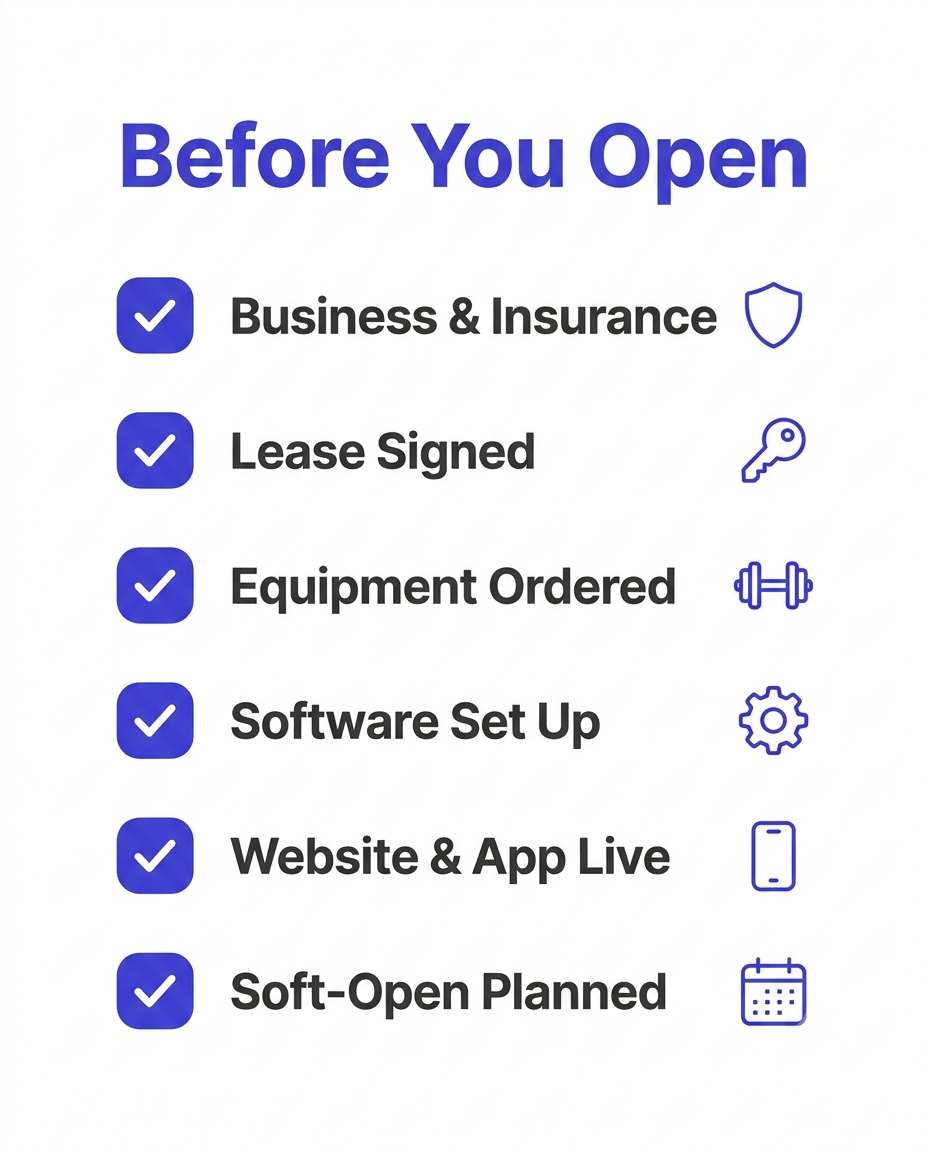
- Business entity registered and an EIN or local equivalent secured
- General and fitness liability insurance in place
- Lease signed with buildout terms and timeline confirmed in writing
- Equipment ordered with realistic delivery and installation lead times
- Booking, payments, and membership software chosen and configured
- Branded app and website live and tested end to end
- Instructor contracts signed and class schedule drafted
- Safety and emergency protocols documented and posted
- A soft-open week planned for founding members before the public launch
Start on the System That Scales With You
The studios that struggle most in their first year usually aren't the ones with the wrong niche, they're the ones running bookings on a spreadsheet, payments through three different apps, and a website nobody updates.
Vibefam is built to be the operating system a new studio runs on from day one: scheduling, payments, and memberships in one dashboard, a branded mobile app live within roughly three weeks, and an AI website builder so launching a professional site doesn't require hiring an agency.
It's the exact gap non-technical first-time owners describe. One Indonesian studio owner put it plainly during onboarding: "kita bukan orang IT nih, jadi agak bingung" ("we're not IT people, so we're a bit confused") (Damar Pilates Studio, Indonesia, onboarding call, April 2026). Vibefam gives boutique studios comprehensive software across operations and marketing, so a first-time owner isn't stitching together four separate tools before they've taught a single class. Book a free demo to see what running your studio on one system actually looks like.