

A well-run Muay Thai gym is built on more than heavy bags and a ring. It's safety equipment members can trust, a floor laid out for sightlines and flow, an instructor-to-student ratio that actually holds, and access control that doesn't get in the way. Here's what that looks like, and how it runs day to day.
What Does a Muay Thai Gym Actually Need for Safety?
Per MuayThai GB's Safe Practice Policy, all training should run only in the presence of a suitably qualified, insured, and experienced instructor responsible for enforcing safe practice, protective gear is the baseline that policy assumes. Gloves, shin guards, headgear, mouthguards, and groin guards should be standard-issue and worn every session, no exceptions. A fully stocked first aid kit in an easily accessible spot handles the minor injuries, cuts, sprains, bruises, that come with any striking discipline.
Beyond first aid, a fire extinguisher and an AED should be on the wall, and every staff member should know exactly where they are and how to use them. A zero-tolerance policy for aggressive or disrespectful behavior belongs alongside the physical safety gear, not as an afterthought, it's what keeps the training environment itself safe, not just the equipment.
How Do You Lay Out a Muay Thai Gym for Safety and Flow?
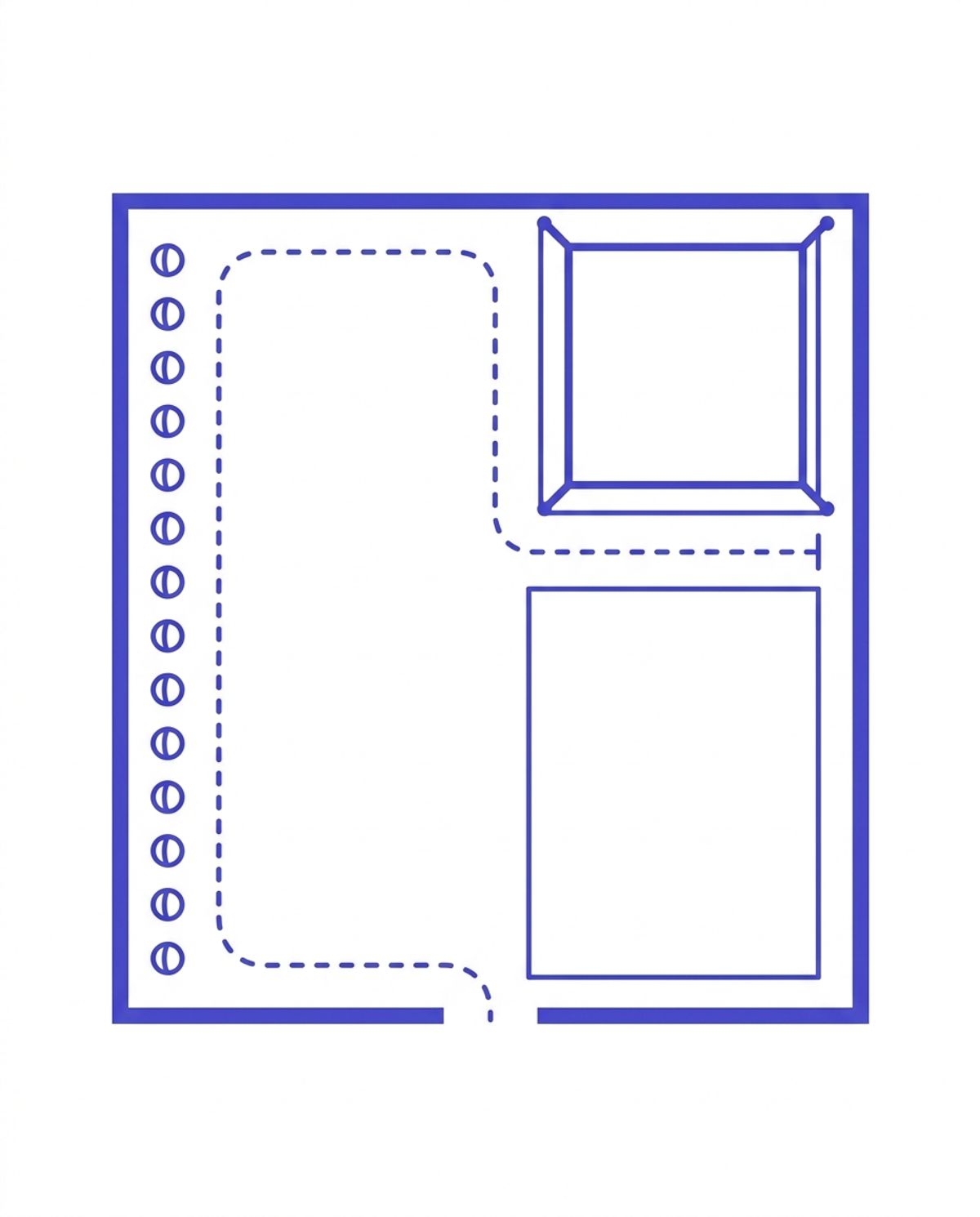
Zoning matters as much as square footage. Heavy bags need their own contained area with clear swing radius, the ring or sparring space needs sightlines an instructor can actually oversee from anywhere on the floor, and mat or warm-up space needs to sit far enough from the bags that a stray kick doesn't become someone else's problem.
In our observations supporting boutique studios across North America and APAC, the gyms with the fewest incidents aren't the newest or best-equipped, they're the ones where an instructor can see the whole floor from a single vantage point. Walkways between zones should be wide enough that members aren't cutting through an active bag rotation to get to the water fountain.
What's the Right Instructor-to-Student Ratio?
A common guideline is one instructor for every 5 to 10 students, tighter for beginner classes where technique correction matters most, looser for advanced sparring sessions where students are already self-sufficient. MuayThai GB's governing safety guidance puts the underlying reasoning simply: experienced instructors watch body mechanics, pair students appropriately, and step in early when technique breaks down, which only works at a ratio an instructor can actually oversee.
Instructor-to-student ratio only works if the instructor can communicate clearly and consistently, technical expertise without the ability to explain a correction in a way a student actually absorbs doesn't close the gap. Splitting classes into beginner, intermediate, and advanced tracks, with a real assessment before someone moves up, keeps that ratio meaningful instead of just a number on paper.

Keeping a Muay Thai Gym Secure After Hours
Open-mat hours and early-morning sessions are common in Muay Thai, and they're exactly when access control matters most, nobody wants to be handing out physical keys to members who train before staff arrives. A smart lock that unlocks with a one-time code or a phone tap solves that without adding a security guard to the payroll.
The system still has to be simple enough that every member actually uses it. Not every member is comfortable with a QR-code check-in, and a training environment that assumes otherwise creates friction for exactly the members who show up most often. The simplest access system a gym can run is usually the right one.
Running the Gym Day to Day
None of the above holds together without the scheduling behind it: class capacity, waitlists, and coach payroll across a discipline where private coaching and group classes often run side by side. Vibefam offers comprehensive software across operations and marketing, so class scheduling, door access, and coach payroll for a Muay Thai gym all run from the same dashboard instead of three disconnected tools.
Melvin, who runs Rebel Gym in Singapore, built an 11-year Muay Thai and boxing community while using Vibefam to handle payments and bookings, freeing him to focus on teaching and growing the gym itself. In our observations supporting boutique studios across North America and APAC, that's the pattern: the gyms that scale are the ones where the admin work stops competing with the coaching for the owner's attention. See the full cost breakdown of opening a Muay Thai gym in Singapore, or explore Vibefam's martial arts management software directly.
Ready to see it running on your own gym's schedule? Book a free demo.