

A web agency typically runs $2,000 to $8,000 for a small business site, more once booking and payments are involved, plus months of back-and-forth before launch. A generic builder like Wix is cheaper but doesn't natively handle class bookings, packages, or member accounts. Here's what a professional studio website actually costs across all three paths, what pages it needs, and how fast you can realistically launch one without an agency.
How Much Does a Professional Studio Website Cost?
Agency-built small business websites typically run $2,000 to $8,000, with more advanced builds reaching $15,000 or more once ecommerce or a booking system is involved, and boutique agencies quoting $6,000 to $35,000 or more for custom strategy, design, and development work, per 2026 web design pricing research. On top of the upfront build, ongoing maintenance and hosting typically add $1,000 to $6,000 a year.
| Path | Typical cost | Bookings, packages, member accounts |
|---|---|---|
| Web design agency | $2,000–$8,000 (up to $15,000–$30,000+ with booking/ecommerce), plus $1,000–$6,000/yr maintenance | Custom-built, requires ongoing developer involvement to change |
| Wix (DIY builder) | ~$39–$46/month (Business plan), plus separate app subscriptions for booking/payments | Not native, needs third-party booking apps layered on top |
| Vibefam (AI Website Builder) | Included from the Most Popular plan ($189–$209/month), no separate website fee | Native, directly wired to your live schedule, packages, and payments |
A generic builder like Wix is cheaper than an agency, but its own booking and payment tools aren't built for class scheduling, so studios typically end up paying for a separate booking app on top, and reconciling two systems that don't talk to each other. [NEEDS VERIFICATION, confirm current Wix plan pricing before quoting to a prospect, vendor pricing changes]
Website Builder vs. Agency vs. Wix: The Real Difference
The real difference isn't how the site looks, all three paths can produce a clean, professional-looking site. It's what happens after launch: an agency site needs a developer for every change, Wix needs a separate booking app bolted on, and a studio-specific AI builder pulls your live schedule and pricing directly from the system you already run, so the site updates itself.
That last point is the one studio owners underestimate going in. A website that isn't connected to your actual booking system is a second thing to update every time your schedule changes, which is exactly the kind of admin work a small studio team doesn't have spare hours for.
What Pages Does a Studio Website Actually Need?
A studio website needs fewer pages than most owners expect: a homepage with clear class types and a visible booking button, a live class schedule, a pricing/packages page, an about or instructors page, and a contact/location page. Everything beyond that (blog, press, detailed instructor bios) is worth adding later, not blocking launch on.
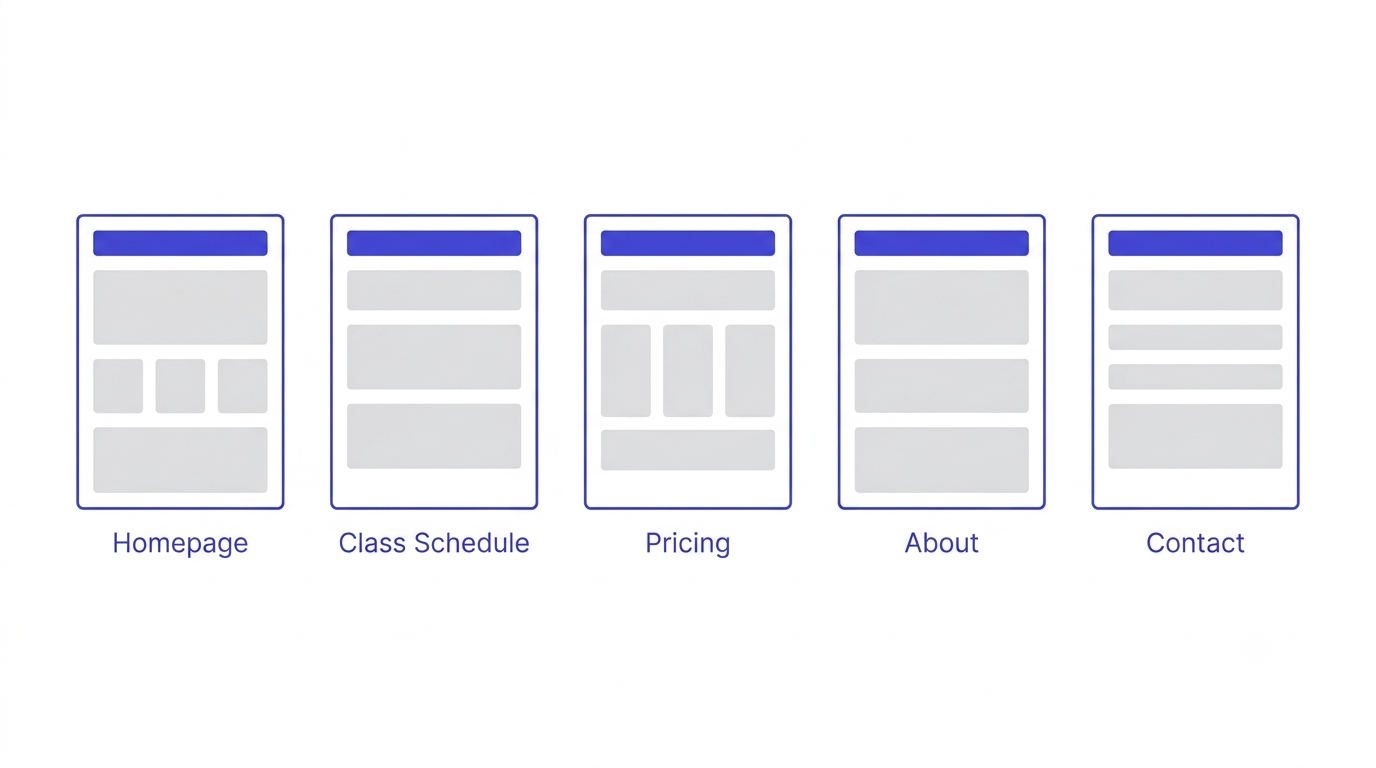
The booking button is the page that actually matters for conversion, if a visitor has to email or call to book a first class, most won't. Class information should be clear, pricing should be transparent, and the path from landing on the site to booking a spot should take a visitor two clicks or fewer.
How Long Does It Take to Launch a Studio Website Without an Agency?
An agency build typically takes several weeks to a few months of design rounds and revisions before launch. A generic DIY builder like Wix can go live faster, often within a week or two, but that timeline doesn't include the extra setup work of connecting a separate booking app and syncing it with your actual schedule.
In our observations supporting boutique studios across North America and APAC, a studio-specific AI website builder is the fastest of the three in practice, because the site is generated directly from data that already exists in the studio's account (classes, instructors, pricing), not built from a blank page. Most studios go from request to a live, booking-ready site in minutes to a few hours, not weeks.
Will a DIY Website Look Unprofessional?
This is the real hesitation behind the agency default, not cost. Some owners assume DIY means amateur-looking. One studio owner described their own approach candidly: it's quite DIY, they said, they'd just play around with it and see what worked, without expecting a polished result on the first try.
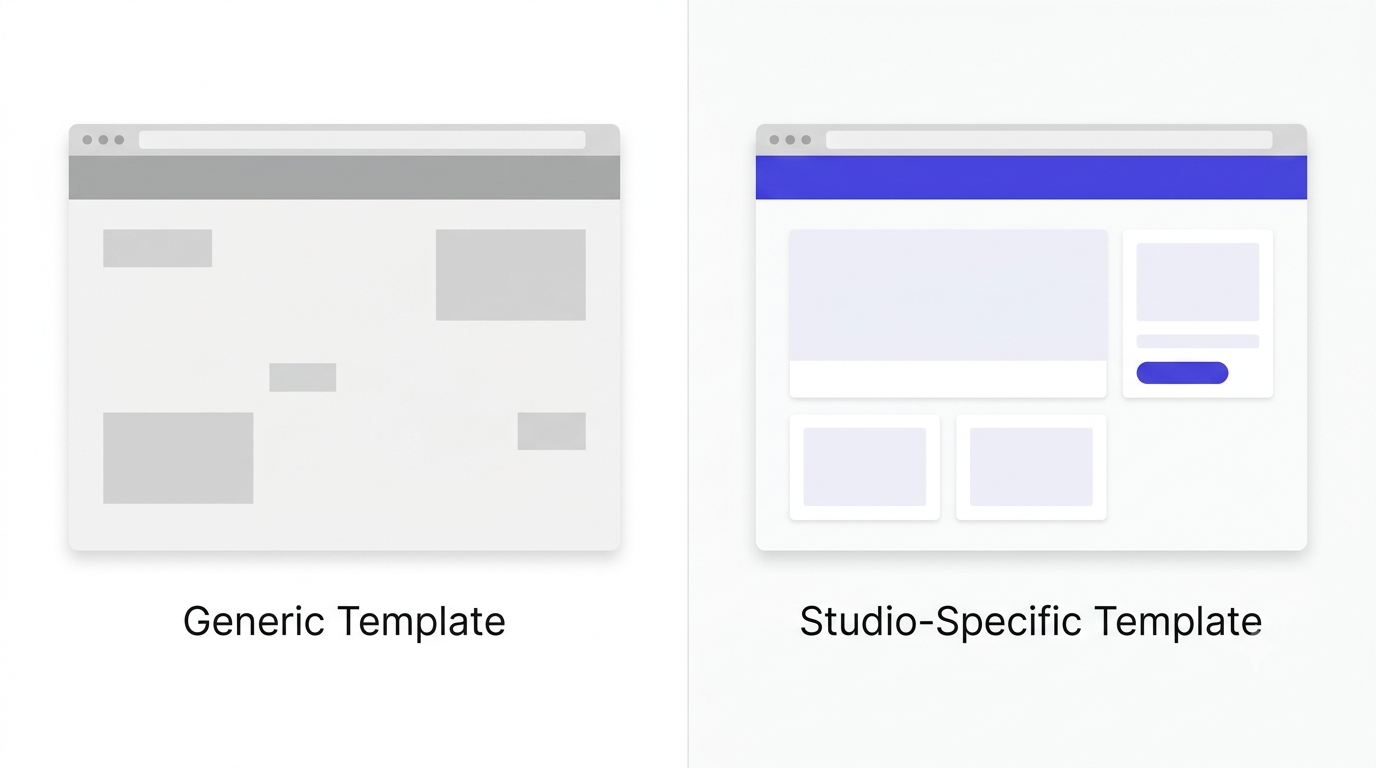
In our observations supporting boutique studios across North America and APAC, that worry mostly doesn't hold up once the builder is designed specifically for fitness studios rather than general small business. A generic DIY builder can look amateur because the owner is designing a layout from a blank template. A studio-specific AI builder starts from a professional template built for exactly this business type, so the baseline result looks intentional even for an owner who has never designed a website before.
If you want a sense of what a polished studio site looks like before building your own, roundups of gym Webflow templates are a useful reference for layout, visual hierarchy, and where the booking CTA usually sits. A template solves the look, though — the schedule, packages and payments behind it still need a system, which is where the two paths diverge.
Get Your Studio's Website Live Without an Agency
The fastest, lowest-maintenance path to a professional studio website is one that's already wired to your bookings, not a separate system you have to keep in sync by hand. Vibefam's comprehensive software across operations and marketing means the AI website builder generates your site directly from your live schedule, packages, and pricing, included from the Most Popular plan, no agency fee and no separate booking app subscription.
For a deeper look at what actually turns a studio website's traffic into paying members, see how a high-converting website turns visitors into members. If you're setting up a website as part of opening a new studio altogether, the new studio resources hub covers the rest of the launch checklist. Book a free demo to see your studio's website generated from your own schedule.