

A gym business plan to help
Key takeaways
- Median independent microgym: 129 clients, $18,750/mo revenue (Two-Brain Business, 2025). Not the 400 you'll see quoted in templates.
- Break-even for a 4,000 sqft functional gym at $200 average revenue per member: about 130 members. Show the math on the page.
- 6% to 19% of gyms fail within one year.
- Coach pay above 44% of the revenue that coach generates is where your owner take-home collapses.
- Reserve six months of fixed cost before you open, not three.
What is a gym business plan actually for?
We compiled real US gym operator data and insights, from data compiled from Two-Brain Business's 2025 State of the Industry and BLS Business Employment Dynamics.
Three people read a business plan for a gym and only one of them is you. Reader one is you, six months before you open, using it to figure out whether the model works. Reader two, if there's one, is your landlord, who wants to see you've thought through paying rent. Reader three, if there's one, is a partner or family investor putting money in. That's it. Most gym openings never involve anyone more formal than that.
The value is you catching your own assumption errors before you sign a lease. Every founder overprojects. The plan is the cheapest simulation you'll ever run, and it exists to save you the version of "I didn't see that coming" that costs you your business.
Do you actually need one?
Honest answer: most gym owners never write a formal plan.
So who's this actually for? Three people:
- You. Writing this for yourself, before you sign anything, is the cheapest failure simulation you can run. Month five of the ramp is where founders discover the mistake the plan they didn't write would have caught.
- A landlord. They may not ask for the whole thing, but they'll want to see you've thought about rent as a share of revenue. An LOI package with a plan attached lands better than one without.
- A partner or family investor. Anyone with money on the line wants to see the ramp and the assumptions before placing their money in you.
This is for owners opening a class-based gym: functional strength, HIIT, HYROX, CrossFit, boxing, group / semi-private / 1:1 coached formats. If you're opening a 24-hour access gym or a low-price high-volume model, this guide is not for you.
If you're one of the many who self-fund, most of the impress-a-stranger content in template downloads doesn't apply to you. Read this as your operating simulation. The discipline of writing down what you actually believe is what catches the assumption error before it becomes a lease penalty.
What actually goes in a gym business plan?
Six questions. Not the nine-section templates you'll see quoted everywhere. Those are for someone else's audit; you're planning your own gym.
| Section | The question you're actually answering |
|---|---|
| Who you're for | Who lives inside a 10-minute drive of the door, and can they afford the price you'll charge |
| What you sell | Group, semi-private, 1:1, or a mix, and which one your model is built around |
| Who you'll hire | The first two coaches, how you'll pay them, and when the third comes |
| How members find you | The 90 days before opening (pre-sale), the six months after (referrals + paid), what a member costs to acquire |
| How a week runs | Class schedule, capacity, staff cover, opening hours, cleaning |
| Whether the numbers work | Fixed stack, contribution margin, break-even members, reserve to bridge the ramp |
That's the plan. Length? As long as it takes to answer those six honestly. Ten pages if you're lean, twenty-five if you have partners to align. Length is the last thing to optimise.
The rest of this piece walks each one, with the numbers you can plug in and the ones you'll need to replace with your own.
Who's your gym actually for?
Nobody opens a neighbourhood gym on the strength of national market size. You're planning around your own catchment: the people who'll actually walk through your door. Start with the Census Bureau's Business Builder, which gives you tract-level income, population and competitor counts free.
Catchment size. The working minimum most location guides quote is 15,000 to 25,000 residents within a 10-minute drive, with 40,000-plus comfortable. That's an operator convention, not a survey median.
| Market type | Catchment | Why |
|---|---|---|
| Dense urban core | 0.5 to 1 mile, or a 10-minute walk | Convenience dominates. Members rarely travel past a nearer option |
| Suburban | 3 to 5 miles, 10 to 15-minute drive | Members will drive if parking is easy |
| Small town | 10 to 15-minute drive | Fewer alternatives, so the draw radius is wider |
Income test. A rough owner-honest rule: monthly membership shouldn't exceed roughly 0.4% of median household income in the catchment. So a $200 group membership implies about $50,000 or better median. It's a rule of thumb. Label it as one, then pull the real median from the American Community Survey for your tracts. If your target price doesn't clear the test, either move the price or move the location.
Competitor scan. Ten direct competitors within your radius, in a Google Maps list. Pull each one's price, class type, capacity and last-year Google review sentiment. Find a niche or gap in the existing offerings.
| Source | What it gives you |
|---|---|
| Census Business Builder | Tract demographics, competitors, consumer spend |
| American Community Survey | Household income, age, commute at tract level |
| County Business Patterns | Establishment counts by NAICS at county / ZIP |
| BLS Occupational Employment Statistics | Coach wage benchmarks by metro (NAICS 713940) |
| Google Maps and Places | Every direct competitor inside your radius |
| ClassPass and studio directories | Live class prices and review sentiment |
For the full startup capital breakdown by gym type, see what it costs to start a gym, line by line. Boxing gym? Read the boxing-specific cost breakdown first.
What are you actually selling?
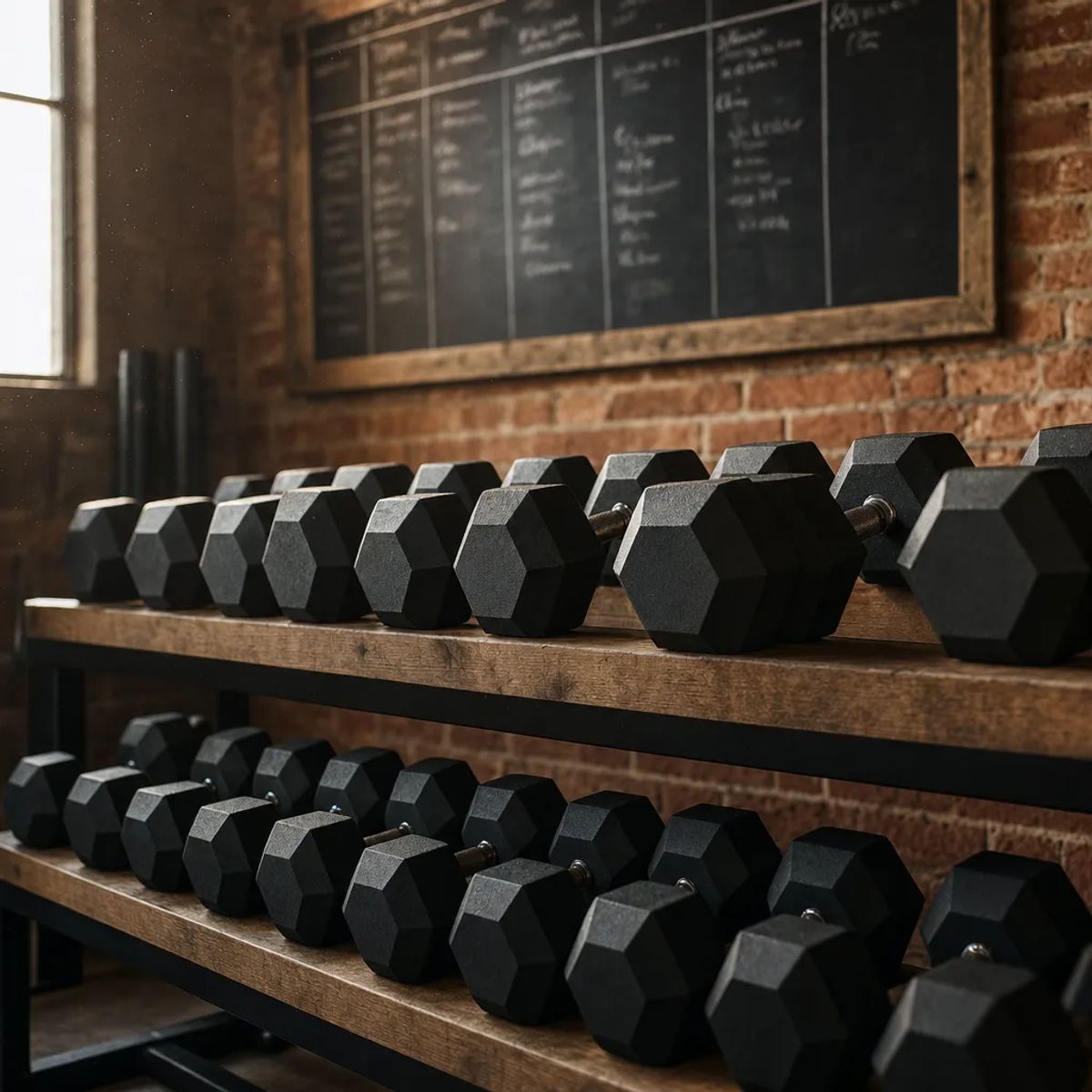
The equipment isn't the business. The model is. Group, semi-private and 1:1 are three different businesses at three different price points, and picking one drives everything downstream, from your ARM to how many members you need to break even.
| Model | Average revenue per member | Class capacity | Margin per coach-hour | Who it's for |
|---|---|---|---|---|
| Group (functional / HIIT) | $167 median (Two-Brain SOTI 2024) | 8 to 14 | About $55/hr at 10 attendees × $5.57 | Members chasing consistency and community |
| Semi-private | $230 median (Two-Brain) | 3 to 5 | About $160/hr at 4 × $60 minus $80 coach | Members chasing results but not full price |
| 1:1 PT | $353 median (Two-Brain) | 1 | Coach hourly minus your cut | Members chasing outcomes on a deadline |
| Hybrid group + PT | $220 to $320 blended (PushPress benchmarks) | Varies | Blended | Most operators, honestly |
Read the margins carefully. Semi-private at four clients per coach-hour returns roughly three times what an unlimited group class does per coach-hour. Not more expensive equipment, not a bigger space, just a different model with a different price point and a different-sized class. Which is why the top-decile independent gyms in Two-Brain's leaderboards blend heavily into semi-private and PT, not group.
Membership vs class packs vs drop-ins is the other choice. Recurring memberships are what makes your revenue predictable, and they're the mix a landlord will want to see when you sign the lease. Class packs read as churn risk. Class packs vs memberships for boutique studios walks through when to allow each.
Ancillary revenue matters more than most founders assume. PushPress published a real 130-member example: semi-private PT $4,950/mo, retail $1,500/mo, nutrition challenge $2,250/mo, workshops $1,200/mo, adds up to about $10,000/mo of non-membership revenue at strong margins (60% to 70%). That's on top of the base $21,671 the same 130 members generate at a $167 ARM.
Real member unit economics
Here's the worked example the rest of the piece is anchored on. 4,000 sqft, secondary metro, $30/sqft all in, one unlimited coached-group membership at $200/mo. Real numbers, replace them with yours.
Fixed monthly stack:
| Fixed line | Monthly |
|---|---|
| Rent and CAM ($30/sqft × 4,000) | $10,000 |
| Utilities | $1,200 |
| Insurance | $150 |
| Software | $250 |
| Marketing | $2,000 |
| Owner draw | $5,000 |
| Other | $1,000 |
| Total fixed | $19,600 |
Coach payroll (about $6,500/mo at this schedule) and payment processing (2.9% of revenue) are deliberately not in that number. Coaching cost scales with the schedule you run, processing scales with revenue. Both are variable. Plenty of plans fold them into the fixed stack and then report the fixed-only total, which is exactly how a table stops adding up.
Break-even:
| Input | Value |
|---|---|
| Fixed cost per month | $19,600 |
| Average revenue per member | $200 (assumption; see below) |
| Variable per member (coach allocation + 2.9% processing) | About $49 |
| Contribution per member | $151 |
| Break-even members (per-member coach treatment) | About 130 |
| Break-even on the schedule-driven coach treatment | About 134 |
| Six-month working-capital reserve | $117,600 |
Break-even at $19,600 ÷ $151 is 129.8, round to 130. The schedule-driven treatment (50 classes/wk × 4.33 wk × $30/class = $6,495 fixed coach cost + 2.9% processing) gives you $26,095 ÷ $194.20 = 134.4 members. Put both in the plan.
Why $200 average revenue per member
This is based on assuming 0.4% of household income is spent on your gym membership. If the median income in your area is less than $50,000, revise the number downwards (or upwards, if it is higher).
Why the reserve is six months, not three
$117,600 here, six times the fixed stack. Thin working capital is the most-cited cause of early failure in every operator sentiment survey we've seen. Three months of reserve funds your optimism, not your business. Six covers the ramp with room to breathe. If you're funded to open with less than six months of fixed cost in the bank, don't open yet.
Who are you going to hire, and how are you going to pay them?
The hardest section for most first-time gym owners, and the one templates skip. Coach cost is your biggest variable line, coach quality is your churn driver, and the hiring sequence is what decides how many hours you personally spend on the floor.
Pay models, US 2026:
| Model | Rate | Notes |
|---|---|---|
| Per-class flat | $15 to $40 per session (ZipRecruiter CrossFit L1, Nov 2025) | Most common for boutique/CrossFit. $30/class is the honest median |
| Per-head | $3 to $8 per attendee | Aligns pay to your fill rate. Works when classes fill; punishes coaches in off-peak |
| Revenue share | 30% to 50% of the class or PT revenue they touch | Two-Brain's four-ninths rule caps at 44% |
| Salaried head coach / GM | $45,000 to $75,000/year | Once you're at 150+ members or 2+ locations |
| Semi-private effective | $80+/hr at $60 × 4 clients | Same coach hour, 3x the group-class rate |
| BLS median fitness trainer 39-9031 | $22.20/hr, $46,180/yr (BLS OOH) | The national anchor; boutique typically pays above this |
The four-ninths rule. Two-Brain published this: pay a coach no more than 44% of the training revenue they personally generate. Above that, your owner take-home collapses because there's nothing left after rent and payroll. Their 4/9ths model writes it out explicitly, and it's the single most useful owner-side pay guardrail we've seen.
Hiring sequence. The first hire for most solo owners isn't the office manager, it's the second coach. Freeing yourself from the Sunday morning class opens 4 to 6 hours a week for sales, member care and the assumptions review you've been putting off. The GM comes at 150+ members or when you're opening a second location, not before.
How are members actually going to find you?
Marketing is where most gym plans go abstract. Here's the concrete version: pre-sell before you open, referral engine after.
Blended acquisition cost benchmark: $100 to $150 per member for a functional / boutique gym in a Tier 2 metro, from a mix of $1,500 to $3,000/mo marketing spend and a 6% to 10% lead-to-member conversion. If your cost per customer acquisition runs above $200 sustained, either your creative isn't landing or your offer isn't right. Fix the offer first.
Month-by-month marketing sequence, months −3 to +6:
| Window | What you're doing | Realistic outcome |
|---|---|---|
| Month −3 to −1 | Founders' presale (50 memberships at a discount, first year locked-in rate), warm-list outreach, Facebook Group for the neighbourhood | 20 to 50 pre-committed members before you unlock the door |
| Month 0 (open) | Grand opening, first-week free class events, local press | Trial spike, most convert 6 to 8 weeks later |
| Month 1 to 3 | Google Business Profile, retargeting the trial cohort, first referral offer to founders | Members ramp from opening cohort to about 80 to 120 |
| Month 4 to 6 | Referral flywheel (2 free weeks per referral works), first paid ad campaign scale-up, community events | Members 120 to 180, break-even between months 6 and 7 |
Pre-sale is the single most under-used lever. Ken Williams and Jessika Loving opened CrossFit SBR in Dallas with 90 members on day one via pre-sale, per John Franklin's Gym World. Their four-location group now runs $113K/mo in aggregate revenue. The pre-sale is what lets you avoid the month-1-through-5 cash trough that catches everyone else.
What actually happens in the first 12 months?
Months 3 through 5 are the cash valley, not the growth problem. Growth almost always shows up. What runs out is the cash to wait for it.
Sample 12-month P&L, boutique / functional gym, secondary metro:
| Month | Members (EOM) | Revenue | Fixed | Variable | Net |
|---|---|---|---|---|---|
| M1 | 55 | $11,000 | $19,600 | $2,700 | -$11,300 |
| M2 | 75 | $15,000 | $19,600 | $3,700 | -$8,300 |
| M3 | 92 | $18,400 | $19,600 | $4,500 | -$5,700 |
| M4 | 108 | $21,600 | $19,600 | $5,300 | -$3,300 |
| M5 | 122 | $24,400 | $19,600 | $6,000 | -$1,200 |
| M6 | 133 | $26,600 | $19,600 | $6,500 | +$500 |
| M7 | 142 | $28,400 | $19,600 | $7,000 | +$1,800 |
| M8 | 152 | $30,400 | $19,600 | $7,450 | +$3,350 |
| M9 | 161 | $32,200 | $19,600 | $7,900 | +$4,700 |
| M10 | 168 | $33,600 | $19,600 | $8,200 | +$5,800 |
| M11 | 175 | $35,000 | $19,600 | $8,600 | +$6,800 |
| M12 | 180 | $36,000 | $19,600 | $8,800 | +$7,600 |
| Year 1 | $312,600 | $235,200 | $76,650 | +$750 |
Coaching modelled per member (about $49/mo) in this table. That's the cleaner treatment for a page. On the schedule-driven treatment (coach cost fixed at $6,495/mo from day one), break-even slides from month 6 to month 7 and the months 1-through-5 trough deepens from about $29,800 to about $42,700. Both fit inside the $117,600 six-month reserve. See the full ramp sequence in the step-by-step gym launch guide.
Two named operators for the shape of a real curve:
- CrossFit Huaka'i (Hilo, HI) grew 80 to 200 members over three years, added $13K/mo, and expanded coaching from 5 to 13. Steady, unglamorous.
- ATP (South Norwalk, CT) built a $1M+ annual revenue business from a 1,000 sqft space by leaning heavily into 1:1 chiro + small-group + PT, outsourcing large-group to school weight rooms. Model choice compounds over time.
In our observations supporting boutique studios across North America and APAC, months 3 to 5 are where founders discover their reserve assumption was optimistic, not their growth assumption. The growth almost always shows up. The cash to wait for it is what runs out.
The mistakes founders actually make
Not a checklist of bad practices. What real operators wish they'd caught in month zero:
- Reserving three months instead of six. Half of first-year closures the operator community documents trace back to under-reserved working capital. See the P&L above. Six months of the fixed stack is $117,600 at these assumptions; three months is $58,800 and it isn't enough.
- Projecting 300+ members by month 12. The independent microgym median is 129 clients per Two-Brain 2025. Your projection landing at 300 by month 12 isn't ambition; it's a red flag on the page.
- Not pre-selling. Every day between "we have the space" and "we open" is a day you're paying rent to zero members. Pre-sale founders is how you land day one with cash flow.
- Underpricing to fill. A $20 lift in ARM across 150 members is $36,000/yr in gross profit and roughly $100,000 over three years, per Two-Brain's own math. Filling at $99 is a marketing win and a business loss.
- Hiring the office manager before the second coach. The GM comes at 150+ members. The second coach comes at whenever you want your Sunday morning back.
- Modelling coaching as variable when it's schedule-driven. The single most common table error in a gym P&L. It shows a rosier month 1 than reality delivers.
- Skipping the catchment competitor scan. Ten competitors, half a Saturday, in Google Maps. If you can't be bothered, don't open.
If you're planning a CrossFit or HYROX affiliate
CrossFit's US affiliate fee is $4,500 a year plus a one-time $1,000 application fee, per CrossFit's affiliate FAQ, up from $3,000 before December 2023. That's $5,500 in year one and $375 a month thereafter.
The question your plan has to answer isn't what the fee is. It's whether $4,500/yr still buys $4,500/yr of leads in your catchment. That's a question about how many affiliates already sit inside your 10-minute drive time, not about the global affiliate count. Global affiliate count has dropped from a 2018 peak above 15,000 to about 9,900 in 2026 per BarBend / CrossFit affiliate map, and Chris Cooper's own read (Two-Brain, March 2025) is that "most CrossFit gyms operate at breakeven or worse." Do the math for your specific market before you sign.
For the rest of the CrossFit-specific stack, see the full CrossFit startup costs.
HYROX is a different model entirely. Two tiers, both bolt-on rather than replace. HYROX Training Club runs roughly $130/mo (about $1,560/yr) with minimal equipment investment — you use the gear you already own, and pay for the programming, the Performance Hub listing, and the HYROX-athlete traffic that comes with it. HYROX Performance Centre is around $295/mo with multi-year terms, plus a race-spec equipment package that lands between $150K and $220K depending on how you scale it, per Wodify's 2025 breakdown.
For most independent operators, Training Club is the honest entry point. It doesn't rebuild your P&L; it adds a programming stream and puts you on the map for athletes already looking for a place to train.
The strategic question mirrors CrossFit: how many affiliated gyms already sit inside your 10-minute drive time, and whether the label moves the needle for the athletes who'd otherwise pick a competitor.
For the rest of the HYROX-specific stack, see the full HYROX startup costs.
What to do with this on Monday
Two things.
- Open a spreadsheet and build three tables: your fixed stack, your break-even count, and a 12-month member ramp with the months 1-through-5 trough covered from a named reserve. The ramp has to land somewhere a real person believes: Two-Brain Business puts the 2025 median microgym at 129 clients.
- Go pre-sell 20 founders' memberships in the 60 days before you open. Discounted rate, first-year price locked in, no commitment beyond the founding cohort. If you can't sell 20, your assumptions are optimistic and you'll catch that in the pre-sell, not in month 4 when the rent's due.
FAQ
How many members does a gym need to break even? For a 4,000 sqft functional or boutique gym with about $19,600 of monthly fixed cost and a $200 average revenue per member, break-even is roughly 130 members.
What's a realistic year-one revenue for an independent gym? For an independent microgym at the Two-Brain 2025 sample median of 129 clients and their $167 average revenue per member, roughly $258,000. Anything above $500,000 in year one for a single location is optimistic.
Do I actually need a business plan if I'm not applying for a loan? Yes, but treat it as your operating simulation rather than a document for anyone else. Most gym openings never involve a formal outside investor. The value is you catching your own assumption errors before you sign a lease, and the six-question framework in this piece is enough.
How much marketing budget do I need to open? Pre-sale months −3 to −1 typically run $500 to $2,000/mo (Facebook, Instagram, community outreach) and should convert 20 to 50 founding members before you open. Blended acquisition cost lands $100 to $150 per member in a Tier 2 metro. If your CAC runs above $200 sustained, the offer is wrong, not the spend.
What percentage of gyms actually fail in the first year? Roughly 6% to 19%, from BLS Business Employment Dynamics for the arts, entertainment and recreation category.
Sources
Every citation in this piece, in the order you meet them.
- Two-Brain Business, Critical Digits 2025 · median microgym 129 clients, Big Group median $18,750/mo, ARM $167 (2024), 4/9ths rule reference
- BLS, Business Employment Dynamics survival table, arts/entertainment/recreation · 2015 to 2020 cohort survival series that corrects the 43% and 81% folklore
- Census Bureau, Business Builder · free tract-level catchment demographics
- American Community Survey · tract-level household income for the affordability test
- Health & Fitness Association, Why Most Startup Fitness Studios Fail (Schmaltz, 2018) · the source of the "81% fail year one" quote
- ZipRecruiter, CrossFit trainer salary · L1 hourly avg $23.02, range $15 to $45
- BLS Occupational Outlook, Fitness Trainers 39-9031 · median $22.20/hr, $46,180/yr
- Two-Brain, 4/9ths pay model (Profit First for Micro Gyms) · coach pay ceiling as owner discipline
- John Franklin, Gym World (2025-10-03) · Ken Williams / Jessika Loving CrossFit SBR launch: 90 day-1 members via pre-sale, $113K/mo aggregate across 4 locations
- CrossFit Affiliate FAQ · $4,500/yr + $1,000 application, US
- CrossFit Affiliate Application Overview · Level 1 is the minimum credential
- BarBend, CrossFit affiliate fee increase one year later · global affiliate count trend 2018 to 2026
- Wodify, How to Open a HYROX Gym (2025) · HYROX Training Club (~$130/mo) vs Performance Centre (~$295/mo + $150K–$220K equipment package)